

1) What I Learned Testing Ham Cheese Puff Pastry
When ham and cheese puff pastry leaks, turns pale, or bakes with a soggy bottom, the problem usually starts before it reaches the oven. I’m Linda, and my first batch had too much filling and not enough sealed pastry edge, so the cheese escaped before the layers could puff. After testing smaller spoonfuls, colder pastry, and a lighter egg wash, I discovered that the best puff pastry ham and cheese recipes depend on balance, not extra filling. Now I make these for relaxed family snacks when I want crisp layers, a savory center, and the calm confidence that the tray will bake evenly.
Table of Contents
- 1) What I Learned Testing Ham Cheese Puff Pastry
- 2) Key Takeaways
- 3) Easy Ham Cheese Puff Pastry Recipe
- 4) Why Most Ham Cheese Puff Pastry Recipes Fail
- 5) Ingredients for Ham Cheese Puff Pastry
- 6) How to Make Ham Cheese Puff Pastry
- 7) Recipe Card: Ham Cheese Puff Pastry
- 8) Tips for Making Ham Cheese Puff Pastry
- 9) Common Mistakes & Fixes
- 10) How to Tell Ham Cheese Puff Pastry Is Done
- 11) Professional Secrets Behind Better Ham Cheese Puff Pastry
- 12) Best Dishes or Pairings to Serve With Ham Cheese Puff Pastry
- 13) Making Ham Cheese Puff Pastry Ahead of Time
- 14) Storing Leftover Ham Cheese Puff Pastry
- 15) FAQ (Real Cooking Questions)
- 16) Save This Ham Cheese Puff Pastry Recipe
- 17) Conclusion
- 18) Nutrition
2) Key Takeaways
- Keep puff pastry cold while shaping so the butter layers stay intact and rise instead of melting flat.
- Use a modest spoonful of ham and cheese filling; overfilling is the main reason puff pastry opens and leaks.
- Leave a clean pastry border for sealing, then pinch firmly so steam and melted cheese stay mostly inside.
- Bake at 400°F until the pastries are visibly puffed, golden, and crisp around the edges, not just lightly colored.
3) Easy Ham Cheese Puff Pastry Recipe
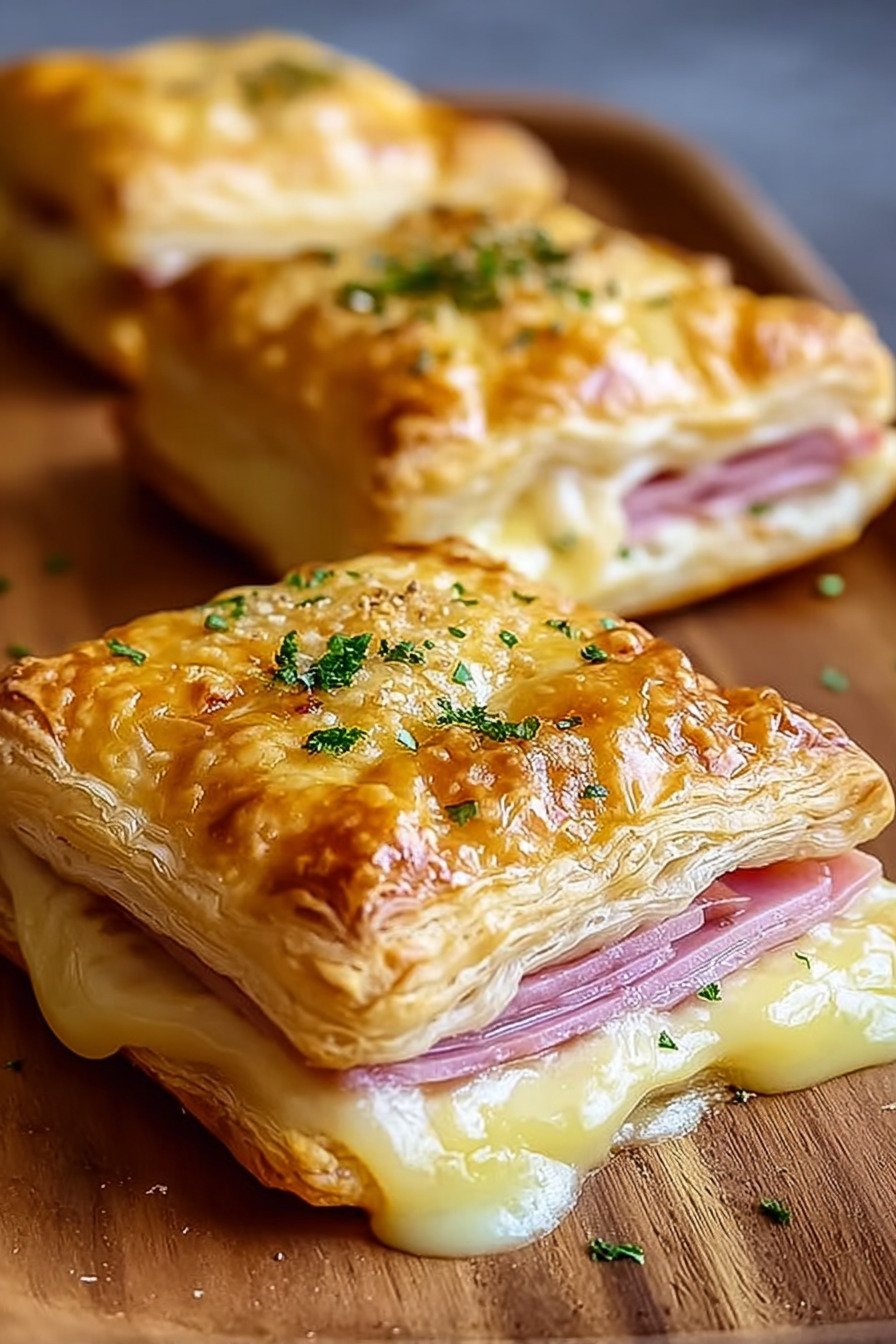
This ham cheese puff pastry recipe is simple, but it rewards careful handling. Puff pastry rises because thin layers of dough and butter release steam in a hot oven. If the pastry gets warm before baking, those layers soften and lose structure. If the filling is too wet or too heavy, the center can burst open before the outside has time to set.
The goal is a crisp, golden outside with a warm savory middle. Diced ham gives salt and chew, shredded cheese melts into the center, and the egg wash helps the top brown. This is one of those savory dishes with puff pastry where the technique matters more than adding more ingredients.
4) Why Most Ham Cheese Puff Pastry Recipes Fail
Most ham and cheese puff pastry problems come from warmth, moisture, or overfilling. Puff pastry needs cold fat and strong oven heat to lift properly. When the dough sits too long at room temperature, it becomes soft, sticky, and harder to seal, which can lead to flat pastry and leaking cheese.
Another common failure is using large chunks of ham or too much shredded cheese. Big pieces create bulky pockets that keep the corners from closing tightly. As the cheese melts, it pushes against weak seams and escapes onto the pan. Smaller diced ham and a controlled spoonful of filling give the pastry room to puff.
A pale top usually means the egg wash was too light, uneven, or the pastries were pulled from the oven too soon. A soggy bottom can happen when the baking sheet is overcrowded or when the filling spills and steams under the pastry. The fix is spacing the pastries well, baking on parchment, and waiting for a deep golden color before removing them.
5) Ingredients for Ham Cheese Puff Pastry
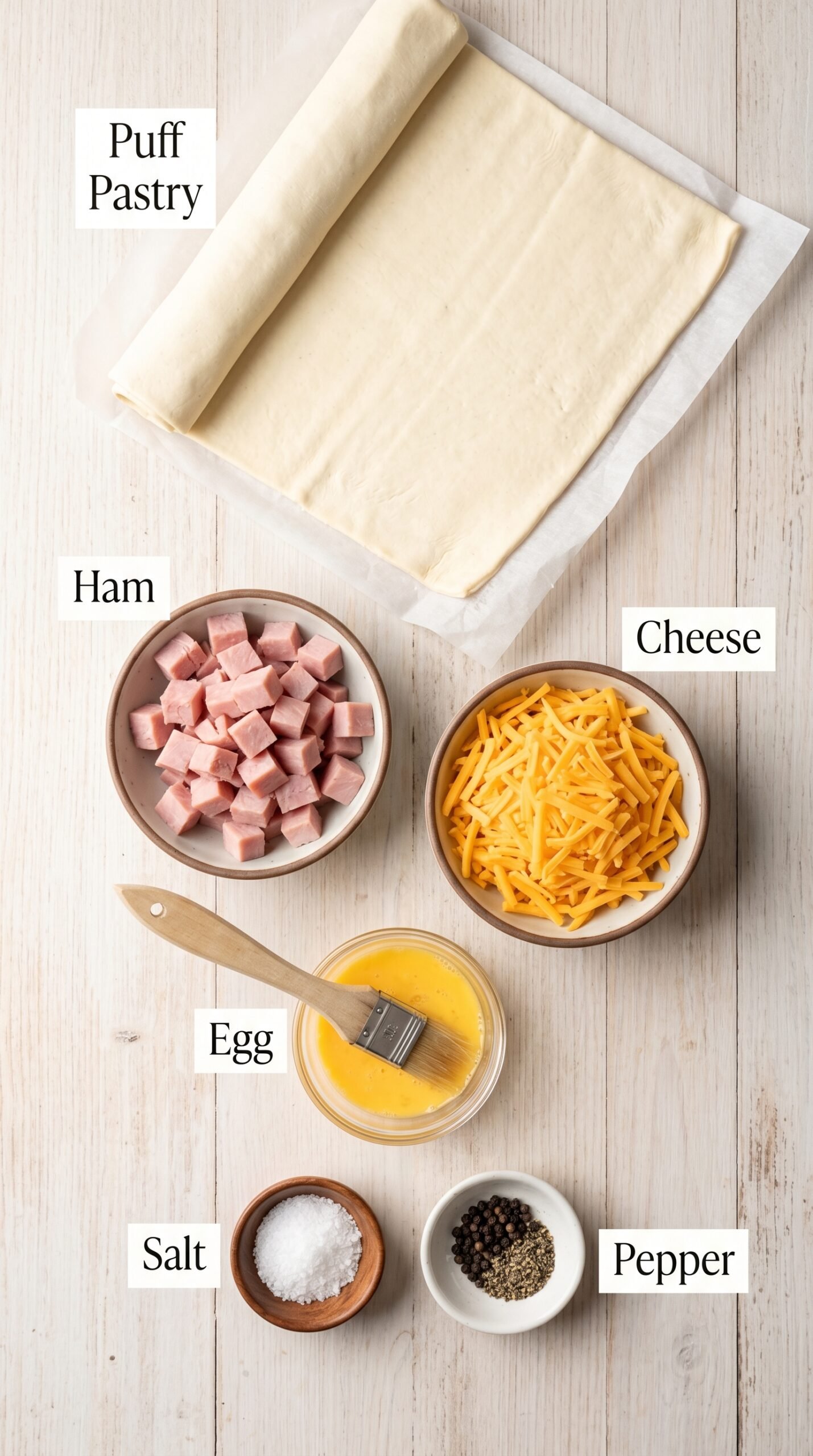
Puff pastry: Use 1 sheet of puff pastry when it is thawed but still cool to the touch. It provides the flaky structure, and if it gets too warm, the layers can compress instead of lifting. Keep it chilled until you are ready to roll and cut.
Ham: Use 4 oz diced ham for a savory, salty filling that stays compact. Dice it small so each pastry square seals neatly. Larger pieces can create gaps at the edges and make the pastry harder to close.
Cheese: Use 4 oz shredded cheese, such as cheddar or Swiss, so it melts evenly through the ham. Cheddar gives a sharper flavor, while Swiss tastes milder and melts smoothly. Avoid piling in extra cheese, because too much filling can break the seams.
Egg: Use 1 beaten egg as an egg wash right before baking. It gives the pastry a glossy, golden surface. Brush lightly; a heavy layer around the seams can make the edges slippery.
Salt and pepper: Use salt and pepper to taste, but season carefully because ham and cheese already contain salt. A light touch keeps the filling savory without making the puff pastry snack taste overly salty.
- Cold pastry vs warm pastry: Cold pastry holds its butter layers, while warm pastry stretches, tears, and bakes flatter.
- Shredded cheese vs sliced cheese: Shredded cheese spreads more evenly through the ham mixture and helps the center melt consistently.
- Small dice vs large chunks: Small diced ham seals more cleanly inside the pastry; large chunks can force the seams open.
- Light egg wash vs heavy egg wash: A thin coating browns the top, while too much egg near the edges may interfere with sealing.
6) How to Make Ham Cheese Puff Pastry
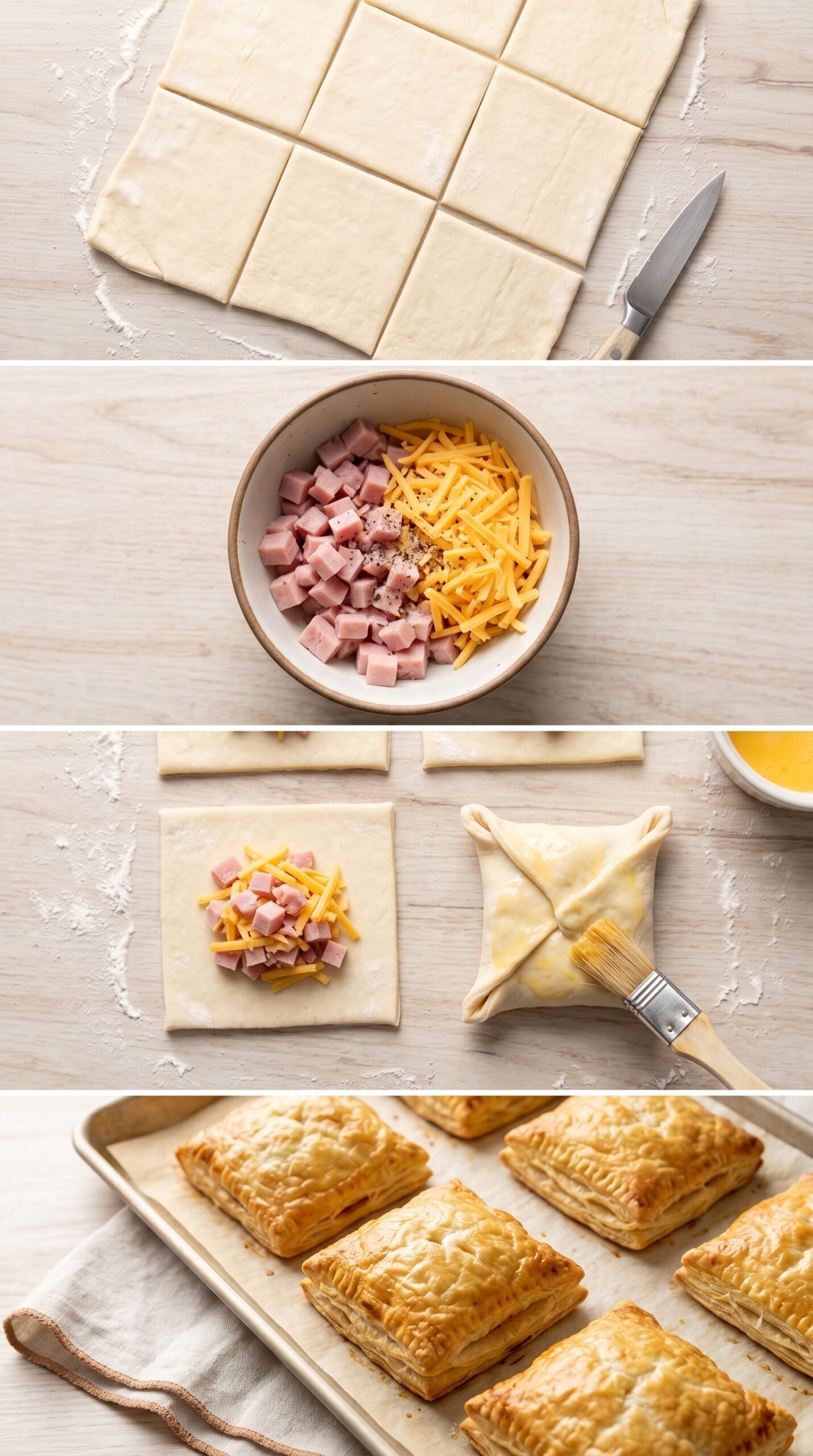
Step 1: Preheat the oven to 400°F before shaping the pastries. Puff pastry needs immediate heat so the layers expand quickly and become crisp instead of greasy.
Step 2: Roll the puff pastry on a lightly floured surface until it is about 1/8-inch thick. Cut it into 3 to 4-inch squares, working gently so the edges stay clean and the pastry does not become overly soft.
Step 3: Mix the diced ham, shredded cheese, salt, and pepper just until evenly combined. The filling should look loose and evenly distributed, not packed down into a dense mass.
Step 4: Add a spoonful of filling to the center of each square. Leave visible space around the edges because that border is what lets the pastry seal and puff without spilling.
Step 5: Fold the corners over the filling and pinch the edges together. If the dough feels too soft or sticky, pause and chill it briefly before baking.
Step 6: Brush the tops with beaten egg, keeping the coating thin and even. The pastry should look lightly glossy, not wet.
Step 7: Arrange the pastries on a parchment-lined baking sheet with space between them. Bake for 15 to 20 minutes, until puffed, golden brown, and crisp along the edges.
Step 8: Let the pastries cool slightly before serving. This short rest helps the melted cheese settle so the first bite stays warm and creamy without spilling everywhere.
7) Recipe Card: Ham Cheese Puff Pastry
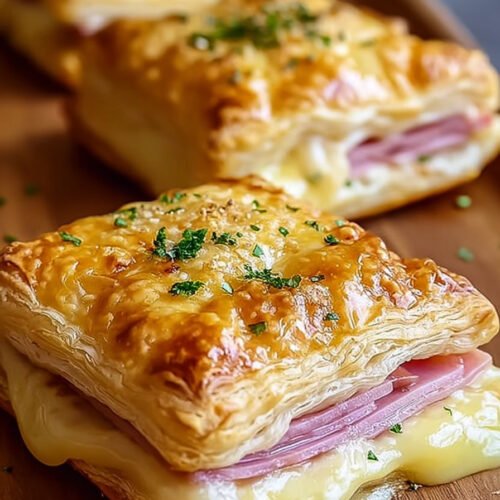
Ham Cheese Puff Pastry with Golden Flaky Layers
Ingredients
- 1 sheet of puff pastry, thawed until pliable but still cold so the layers bake up flaky
- 4 oz ham, diced small so the filling seals neatly inside each pastry
- 4 oz cheese (like cheddar or Swiss), shredded for even melting and balanced savory flavor
- 1 egg, beaten (for egg wash), to help the tops turn glossy and golden
- Salt and pepper to taste, added lightly because ham and cheese are already seasoned
Instructions
- Preheat your oven to 400°F (200°C) so the puff pastry hits strong heat right away and lifts into flaky layers instead of melting flat.
- Roll out the puff pastry on a lightly floured surface until it is about 1/8-inch thick, keeping it cold and handling it gently, then cut it into squares about 3 to 4 inches per side.
- In a bowl, combine the diced ham, shredded cheese, salt, and pepper, mixing just until the filling is evenly distributed without compacting it.
- Place a spoonful of the ham and cheese mixture in the center of each pastry square, leaving clear space around the edges so the pastry can seal without bursting.
- Fold the corners of each square over the filling and pinch the edges together firmly; if the pastry feels too soft, chill it briefly before baking to help the shape hold.
- Brush the tops of each pastry with the beaten egg, covering the exposed pastry lightly but avoiding heavy puddles around the sealed edges.
- Arrange the pastries on a parchment-lined baking sheet with space between them, then bake for 15 to 20 minutes, or until puffed, deeply golden, and crisp at the edges.
- Allow the pastries to cool slightly before serving so the melted cheese settles and the flaky layers stay crisp when bitten.
8) Tips for Making Ham Cheese Puff Pastry
Keep the pastry cold, but not frozen solid. It should unfold without cracking and still feel cool enough to hold its shape. If it becomes floppy while you work, return it to the refrigerator for a few minutes. That small pause can make the difference between lifted layers and flat pastry.
Use less filling than you think you need. A neat spoonful gives the cheese space to melt and the pastry space to puff. When making ham and cheese with puff pastry, extra filling often looks generous before baking but creates leaks once the cheese melts.
Do not skip the parchment paper. Melted cheese can stick quickly to a bare pan, and parchment makes cleanup easier if one pastry opens. It also helps the bottoms release without tearing the flaky layers.
For a cleaner finish, press the seams with dry fingers. If the pastry edges are dusty with too much flour, they may not seal well. If they feel very dry, a tiny touch of water on the edge can help, but do not soak the dough.
9) Common Mistakes & Fixes
Problem: The cheese leaks out. Cause: The pastry was overfilled or the edges were not pinched firmly. Fix: Use a smaller spoonful of filling and leave a clear border before folding.
Problem: The pastry bakes flat. Cause: The puff pastry became too warm before going into the oven. Fix: Chill the shaped pastries briefly if the dough softens while you work.
Problem: The tops look pale. Cause: The egg wash was missed, too thin in spots, or the pastries were removed too early. Fix: Brush the tops evenly and bake until the surface is clearly golden brown.
Problem: The bottoms are soft. Cause: The baking sheet was crowded or leaked cheese created steam under the pastry. Fix: Space the pastries apart and seal each one carefully before baking.
10) How to Tell Ham Cheese Puff Pastry Is Done
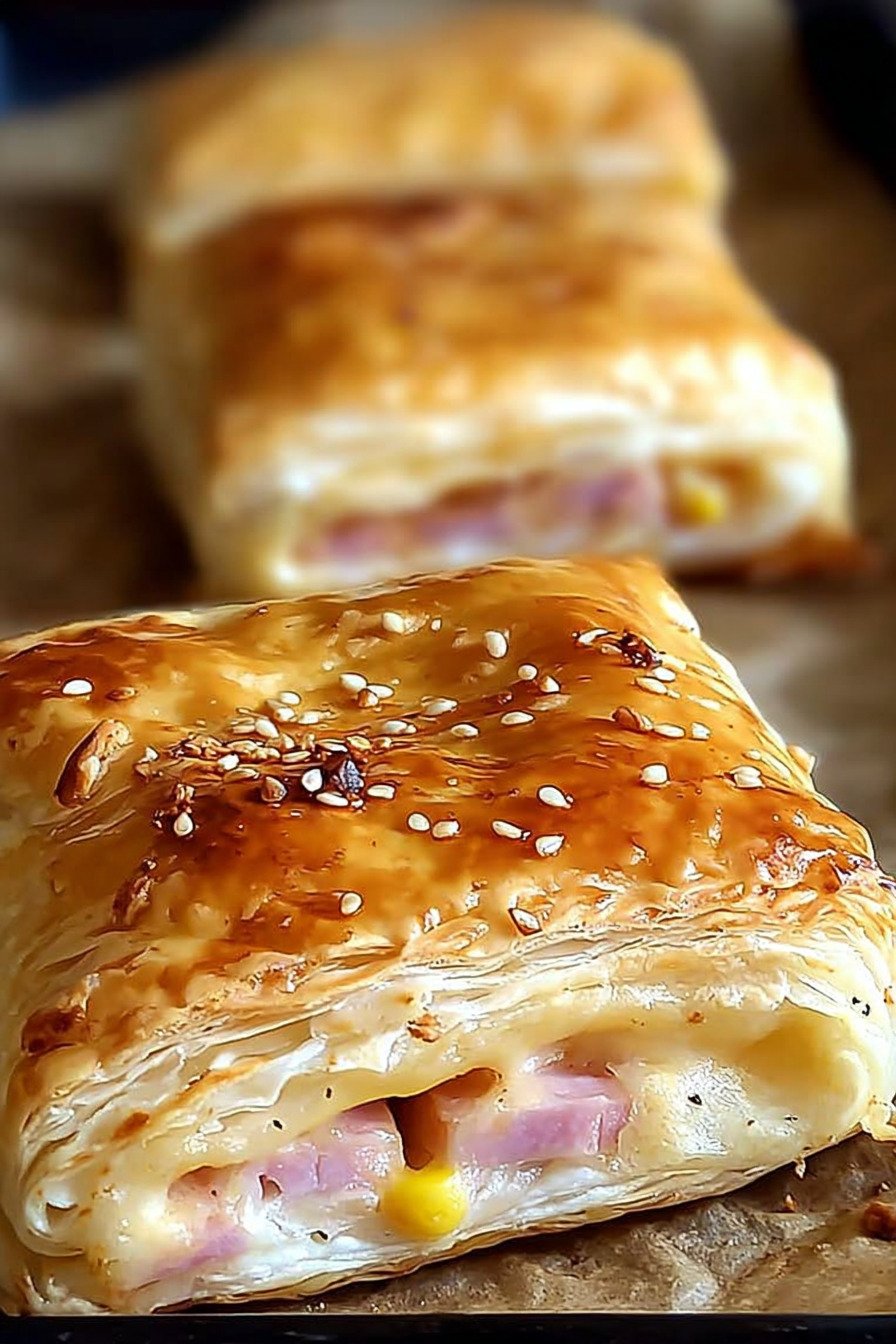
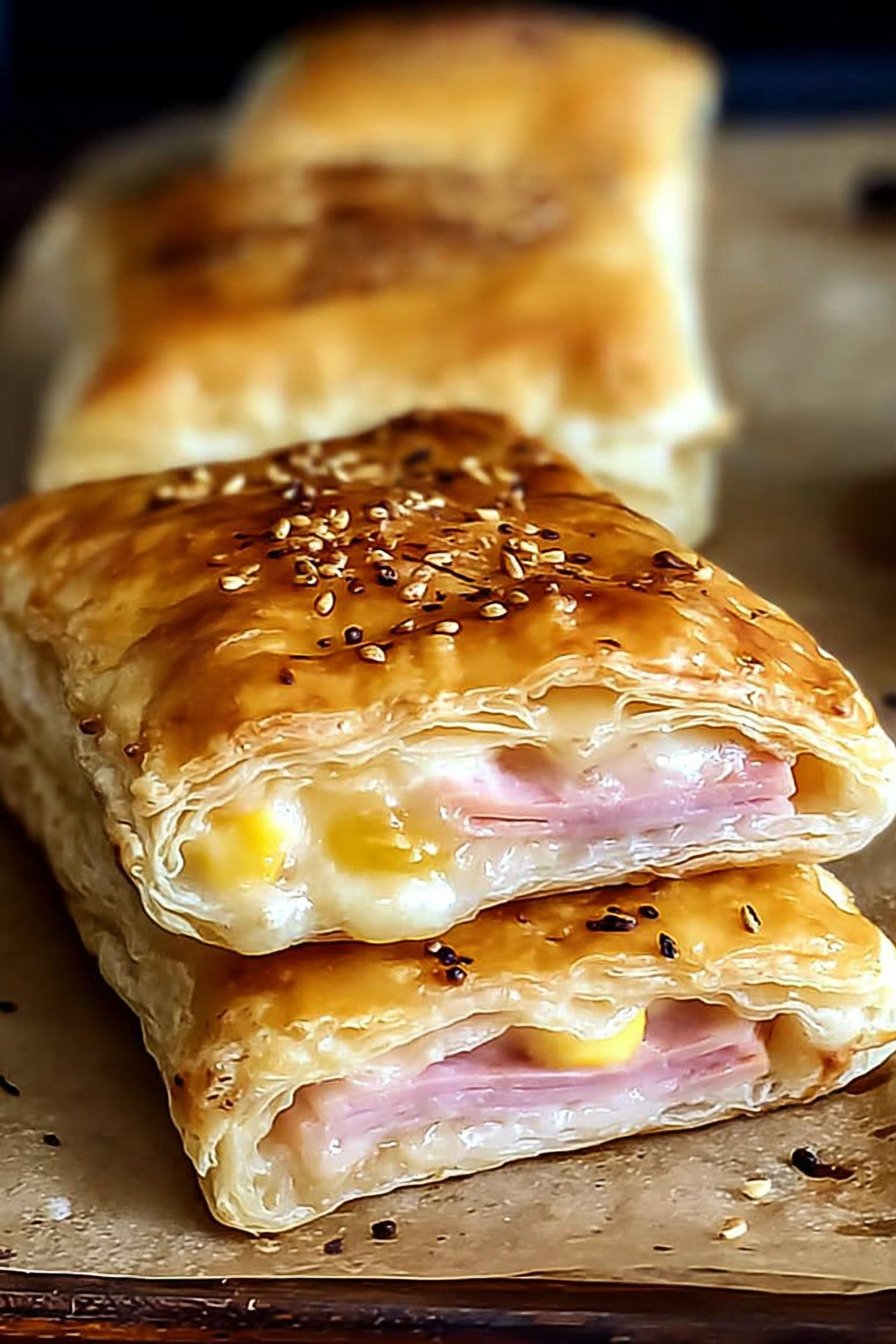
Ham cheese puff pastry is done when the tops are puffed, golden brown, and visibly layered. The edges should look crisp rather than doughy, and the bottoms should feel set when gently lifted with a spatula. If the pastry still looks pale, soft, or compressed, it likely needs a few more minutes.
The aroma should be buttery and savory, with the ham and melted cheese smelling warm but not scorched. The center should be hot enough for the cheese to melt, but the pastry should not feel heavy or wet. A good batch has a crisp outer bite, a tender center, and no large puddles of cheese around the seams.
11) Professional Secrets Behind Better Ham Cheese Puff Pastry
The biggest professional-style secret is temperature control. Bakeries rely on cold pastry and hot ovens because puff pastry needs contrast. Cold butter inside the dough creates steam when it hits heat, and that steam lifts the layers. If the pastry warms too much before baking, the butter melts early and the lift weakens.
The second secret is controlled filling. A good puff pastry sandwich-style bite should feel full, but not packed. The filling needs enough room to heat, melt, and expand without bursting through the seams. A smaller amount of filling often creates a better finished pastry than an overloaded center.
The third secret is visual patience. Pulling the tray too early gives pale pastry with a soft bite. Wait until the pastry is puffed and deeply golden, especially along the edges. That color tells you the layers have baked through and the outside has crisped properly.
12) Best Dishes or Pairings to Serve With Ham Cheese Puff Pastry
Ham cheese puff pastry works well as a warm snack, brunch bite, lunchbox addition, or appetizer. Serve it with tomato soup when you want a cozy meal, or pair it with a crisp green salad to balance the buttery pastry and melted cheese.
For a brunch table, serve the pastries with fruit, scrambled eggs, or a simple cucumber salad. For a party tray, add mustard, honey mustard, or a light herb dip on the side. The pastry already has richness, so bright or tangy sides help keep the plate balanced.

13) Making Ham Cheese Puff Pastry Ahead of Time
You can shape ham cheese puff pastry ahead and keep it chilled before baking. Place the formed pastries on a parchment-lined sheet, cover lightly, and refrigerate until ready to bake. This works especially well because cold pastry usually puffs better than pastry that has been sitting warm on the counter.
For the best texture, brush with egg wash shortly before baking rather than too far in advance. If the egg wash sits too long, it can soften the surface. Bake the pastries directly from chilled, adding a minute or two if needed, and watch for puffed layers and golden color.
14) Storing Leftover Ham Cheese Puff Pastry
Store leftover ham cheese puff pastry in an airtight container in the refrigerator for up to 3 days. The pastry will soften as it sits because the filling contains moisture, so the best reheating method is a hot oven or air fryer until the outside crisps again.
Avoid microwaving if texture matters. The microwave warms the filling, but it makes the pastry soft and bendy. For leftover ham and cheese puff pastries, reheat at moderate heat until the center is warm and the edges feel crisp again.
15) FAQ (Real Cooking Questions)
Can I use cheddar or Swiss cheese? Yes. Cheddar gives a sharper, stronger flavor, while Swiss melts smoothly and tastes milder. Both work well in ham and cheese puff pastry.
Why did my puff pastry open while baking? It was likely overfilled, too warm, or not sealed firmly enough. Use less filling, keep the pastry cool, and pinch the edges before brushing with egg wash.
Can I make these ahead for a party? Yes. Shape them ahead, refrigerate them, then brush with egg wash and bake close to serving time. This keeps the pastry crisp and freshly puffed.
Can I add other fillings? You can add small optional extras, but keep them dry and finely chopped. Wet vegetables or too much filling can make puff pastry ham and cheese recipes soggy or leaky.
How do I keep the bottoms from getting soggy? Use parchment paper, avoid overfilling, leave space between pastries, and bake until the bottoms are set. A crowded pan traps steam and softens the pastry.
16) Save This Ham Cheese Puff Pastry Recipe
If this Ham Cheese Puff Pastry helped you solve leaking cheese, pale tops, or soft pastry, save it for brunch, snacks, or a quick savory tray. The key reminder is: keep the pastry cold, use a modest filling, and bake until the layers are fully golden.
17) Conclusion
Ham cheese puff pastry looks simple, but the difference between a flat, leaky pastry and a golden, flaky one comes down to small choices. Cold dough, small diced ham, evenly shredded cheese, firm sealing, and a proper bake all work together. Once you understand those details, this recipe becomes more predictable and more satisfying.
The real secret is not adding more filling; it is giving the pastry the right conditions to rise. When the edges are sealed, the egg wash is light, and the oven is hot, you get crisp layers wrapped around a warm savory center.
18) Nutrition
Serving Size 1 portion Calories 210 Sugar 1 g Sodium 430 mg Fat 14 g Saturated Fat 6 g Carbohydrates 14 g Fiber 1 g Protein 8 g Cholesterol 42 mg






Leave a Comment