
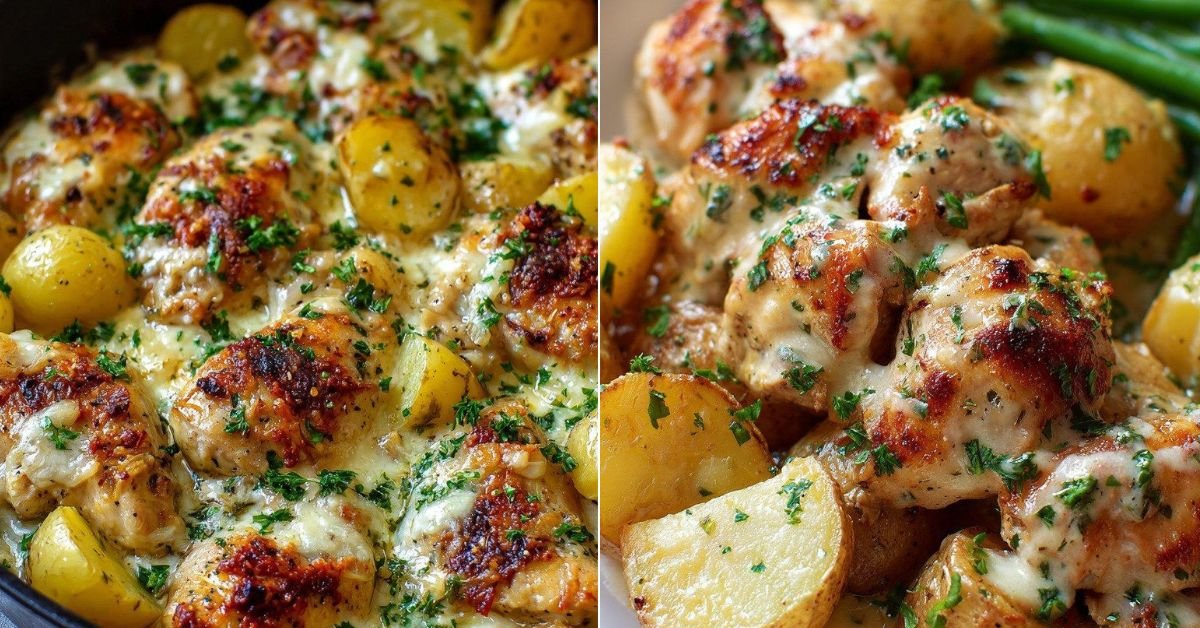
1) What I Learned Testing Garlic Parmesan Chicken and Potatoes
Dry chicken with pale potatoes can ruin a simple dinner fast. I’m Linda, and after one batch where the chicken finished before the potatoes softened, I started testing pan spacing, potato size, and when to add Parmesan. The discovery was that garlic parmesan chicken and potatoes works best when the potatoes are cut evenly, the chicken is seasoned separately, and the buttery Parmesan finish goes on after roasting. This one pan garlic parmesan chicken and potatoes dinner gives me the calm, reliable comfort I want on a family dinner night.
Table of Contents
- 1) What I Learned Testing Garlic Parmesan Chicken and Potatoes
- 2) Key Takeaways
- 3) Easy Garlic Parmesan Chicken and Potatoes Recipe
- 4) Why Most Garlic Parmesan Chicken and Potatoes Recipes Fail
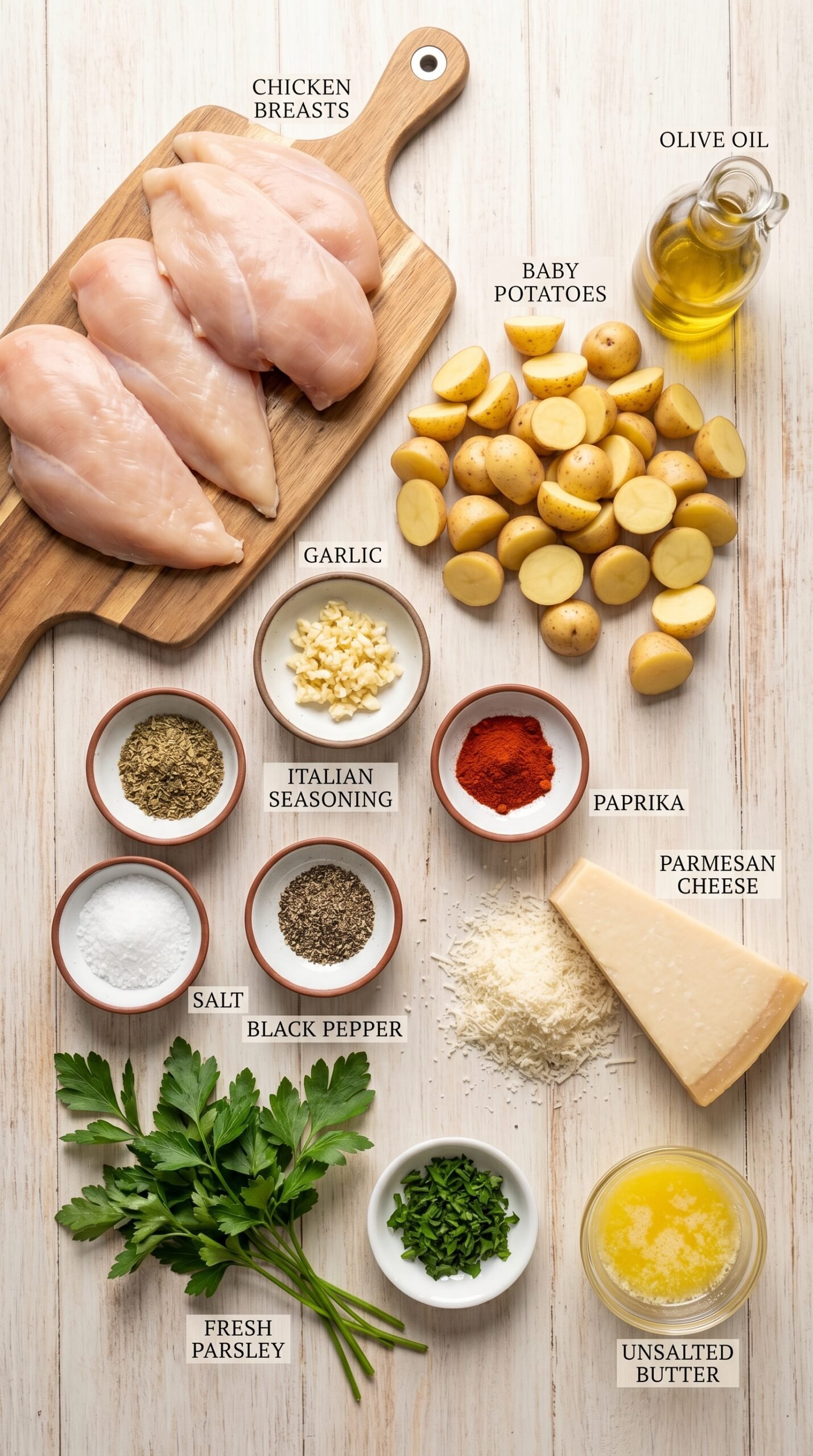
- 5) Ingredients for Garlic Parmesan Chicken and Potatoes
- 6) How to Make Garlic Parmesan Chicken and Potatoes
- 7) Recipe Card: Garlic Parmesan Chicken and Potatoes
- 8) Tips for Making Garlic Parmesan Chicken and Potatoes
- 9) Common Mistakes & Fixes
- 10) How to Tell Garlic Parmesan Chicken and Potatoes Are Done
- 11) Professional Secrets Behind Better Garlic Parmesan Chicken and Potatoes
- 12) Best Dishes or Pairings to Serve With Garlic Parmesan Chicken and Potatoes
- 13) Making Garlic Parmesan Chicken and Potatoes Ahead of Time
- 14) Storing Leftover Garlic Parmesan Chicken and Potatoes
- 15) FAQ (Real Cooking Questions)
- 16) Save This Garlic Parmesan Chicken and Potatoes Recipe
- 17) Conclusion
- 18) Nutrition
2) Key Takeaways
- Cut size controls the whole recipe: Baby potatoes should be halved or quartered so they become tender during the same roasting window as the chicken.
- Pan spacing matters: A crowded pan traps steam, which can leave the potatoes pale and the chicken less flavorful.
- Parmesan works best in layers: Some seasons the chicken before baking, while the rest finishes the pan after the butter is brushed on.
- The thermometer prevents dry chicken: Pull the chicken when it reaches 165°F, then let it rest briefly before slicing.
3) Easy Garlic Parmesan Chicken and Potatoes Recipe
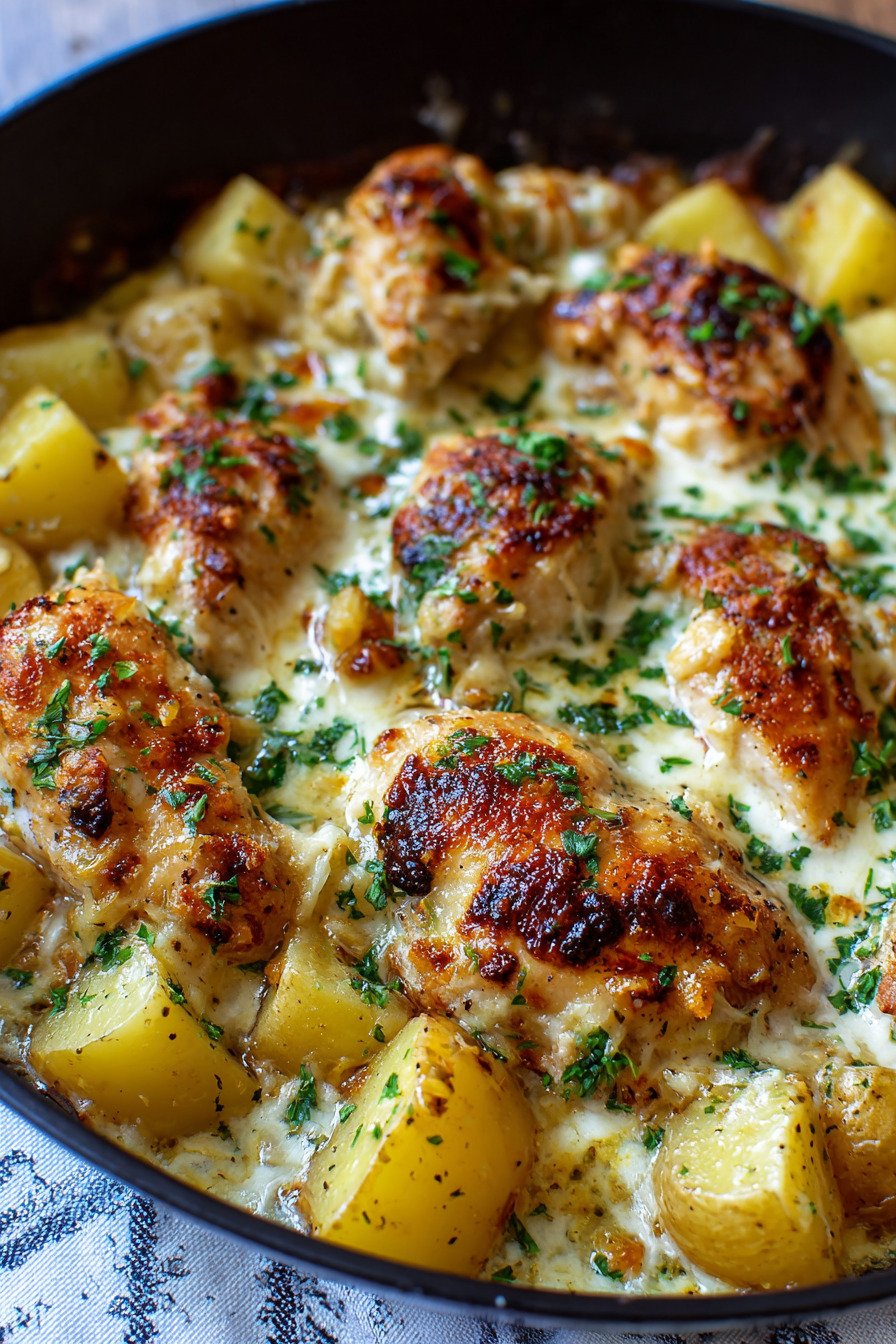
This garlic parmesan chicken and potatoes recipe is a sheet pan style dinner built around timing. Boneless skinless chicken breasts cook quickly, while potatoes need enough surface contact with the hot pan to turn tender and golden. That is why the potatoes are seasoned first with olive oil, garlic, Italian seasoning, paprika, salt, and pepper, then spread on one side of the pan. The chicken gets its own olive oil, garlic, pepper, salt, and Parmesan coating so the surface develops savory flavor without becoming weighed down.
The goal is juicy chicken, fork-tender potatoes, a warm garlic aroma, and a Parmesan finish that tastes rich without making the pan greasy. This is an easy chicken and potatoes recipe, but it still rewards careful details: even cutting, divided seasoning, enough pan space, and a final butter brush while the food is still hot.
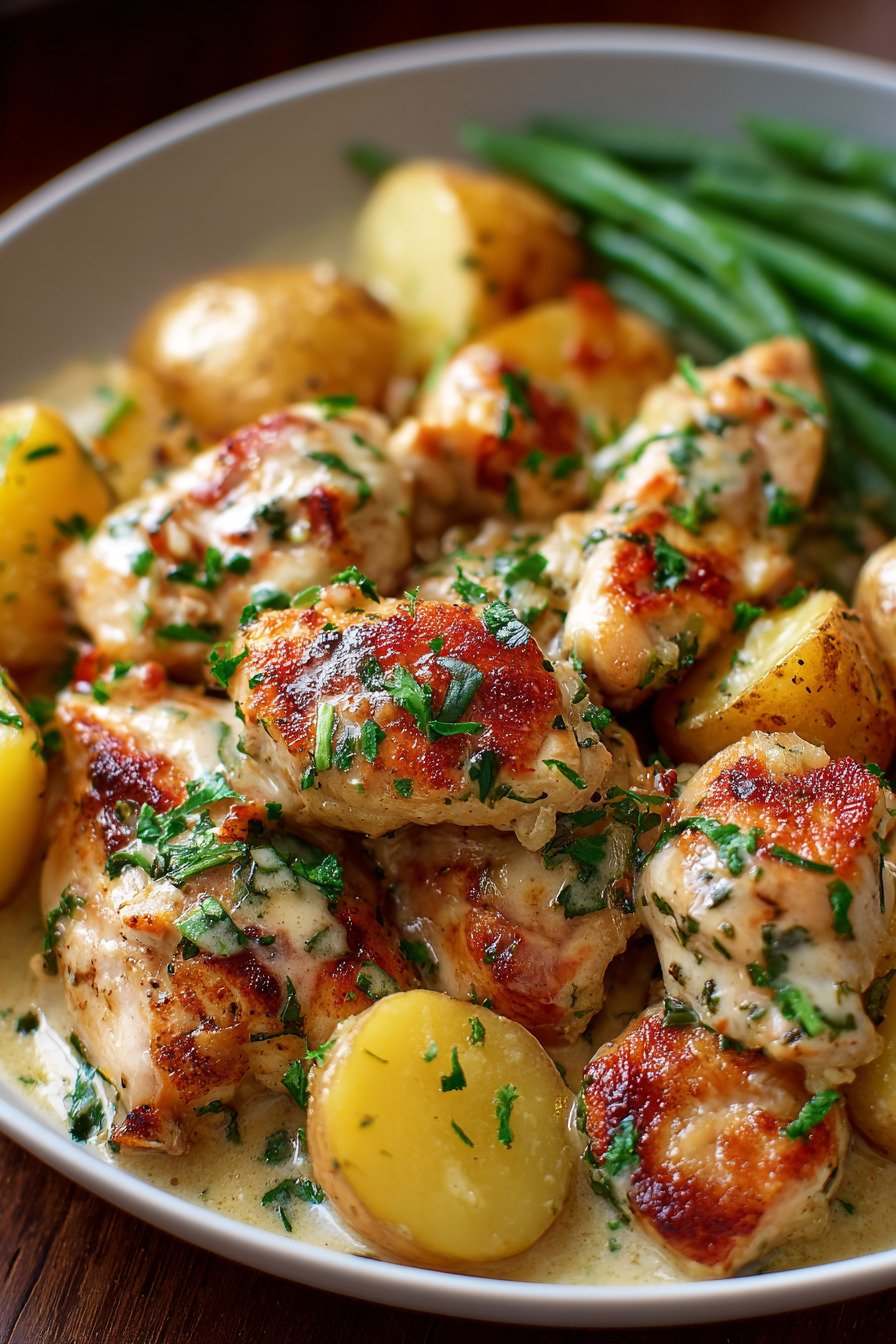
4) Why Most Garlic Parmesan Chicken and Potatoes Recipes Fail
Most garlic parmesan chicken and potatoes recipes fail because chicken and potatoes do not cook at the same speed unless the size and spacing are handled correctly. Thick chicken breasts can dry out on the outside before the center reaches a safe temperature, while large potato pieces can stay firm even after the chicken is done. Cutting the potatoes evenly and using a thermometer for the chicken solves that timing conflict.
Another common failure is watery roasting. If the pan is too small, the potatoes release moisture and steam instead of browning. You will see pale surfaces, soft edges, and little roasted aroma. A large baking dish or sheet pan gives the potatoes room to make direct contact with heat, which creates better color and a deeper flavor.
Garlic can also become a problem. Minced garlic tastes sharp when it is clumped in one spot and can burn if exposed too heavily on dry surfaces. Dividing the garlic between the potatoes and chicken spreads the flavor more evenly. Parmesan can turn dry or grainy if too much is baked for too long, so this method uses some before roasting and saves the rest for the buttery finish.
5) Ingredients for Garlic Parmesan Chicken and Potatoes
Boneless skinless chicken breasts: Use 1 ½ pounds, about 3 to 4 pieces. Chicken breasts work well here because they cook cleanly beside the potatoes, but they need even thickness and careful temperature checking. If one piece is much thicker than the others, it may need light pounding so every portion finishes at the same time.
Baby potatoes: Use 1 ½ pounds, halved or quartered if large. Baby potatoes hold their shape well during roasting and give this baked chicken and potatoes recipe a tender center with golden edges. If the pieces are too large, they can lag behind the chicken and stay firm in the middle.
Olive oil: The divided olive oil helps coat the potatoes and chicken separately. It carries the seasonings, encourages browning, and keeps the chicken surface from drying too quickly. If you reduce the oil too much, the potatoes may roast unevenly and the seasoning may taste dusty instead of rounded.
Garlic: Minced garlic gives the dish its main savory aroma. Use it when seasoning both the potatoes and chicken so the flavor is not concentrated in only one part of the pan. If the garlic is chopped too large, it can taste sharp in some bites and underdeveloped in others.
Italian seasoning: This adds dried herb flavor that holds up well in the oven. It works best on the potatoes because the oil helps bloom the herbs as they roast. If you skip it, the recipe still works, but the flavor will taste less rounded.
Paprika: Paprika adds mild warmth and helps the potatoes look more roasted. It is not meant to make the dish spicy; it gives color and a gentle savory background.
Salt and black pepper: Salt brings out the flavor of both the chicken and potatoes, while black pepper adds a clean finish. Season before roasting, then taste at the end because Parmesan also adds saltiness.
Parmesan cheese: Parmesan gives salty, nutty depth. Using half on the chicken before baking and the rest at the end prevents the cheese from drying out too much while still giving the dish a strong garlic parmesan chicken recipe flavor.
Fresh parsley: Parsley is added after roasting for freshness and color. It keeps the finished dish from tasting too heavy, especially with the butter and Parmesan.
Unsalted butter: Melted butter is brushed on after baking, not before, so the final flavor tastes rich and glossy. Unsalted butter gives you more control because Parmesan and the seasoned chicken already bring salt.
- Baby potatoes vs larger potatoes: Baby potatoes cook faster and keep a creamy interior. Larger potatoes must be cut smaller or they may stay firm while the chicken is already cooked.
- Warm finish vs baked-on finish: Adding butter and some Parmesan after roasting gives a smoother, fresher coating than baking all the cheese from the start.
- Fresh garlic vs garlic powder: Fresh garlic gives stronger aroma and a more homemade flavor. Garlic powder can be used only as a backup, but it will not give the same texture or fragrance.
- Spaced pan vs crowded pan: Spacing gives browning. Crowding creates steam, softer potatoes, and weaker roasted flavor.
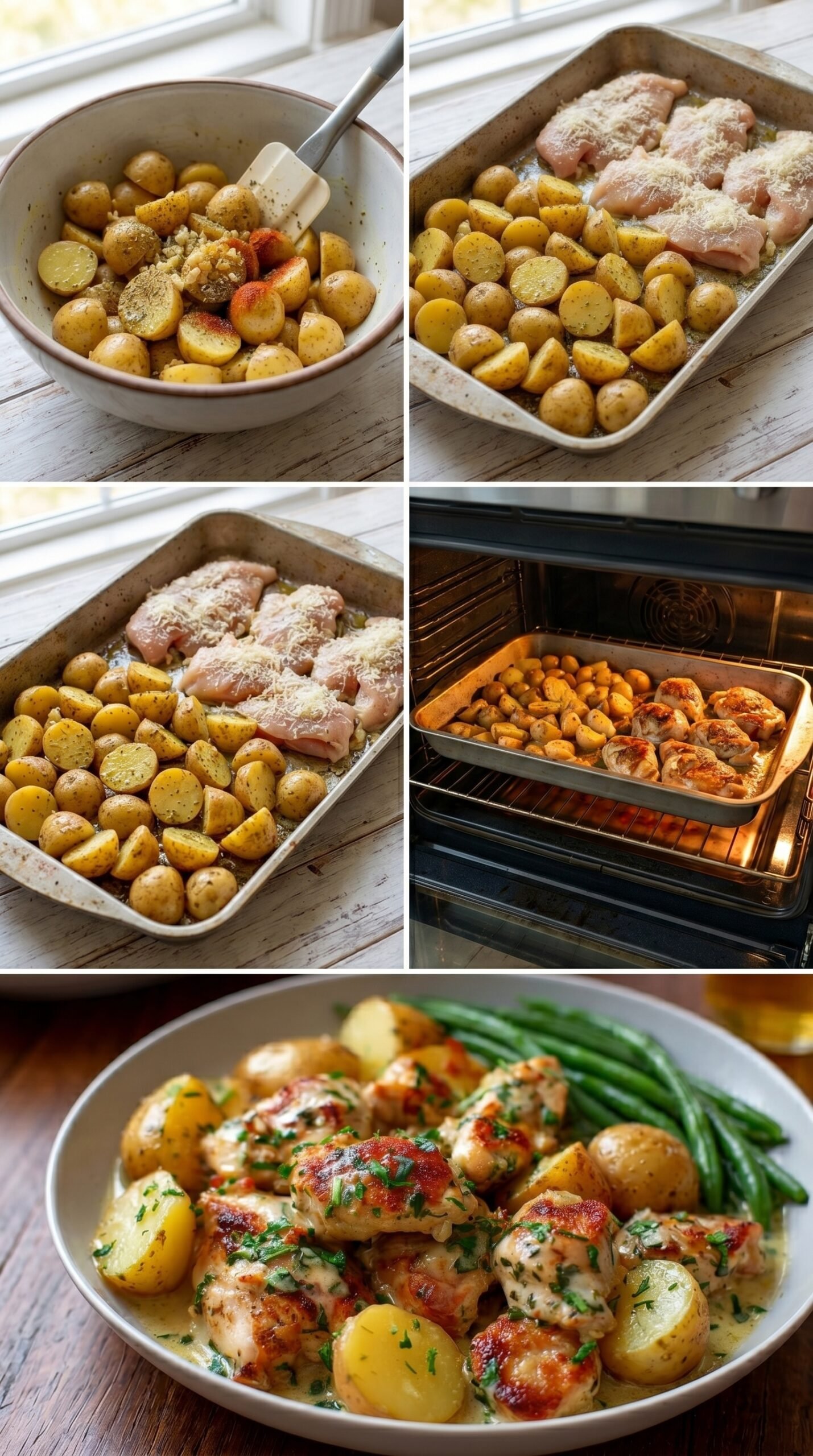
6) How to Make Garlic Parmesan Chicken and Potatoes
Step 1: Heat the oven to 400°F and lightly grease a large baking dish or sheet pan. The pan should be large enough for the potatoes and chicken to sit in a single layer because direct heat contact is what gives the potatoes better edges.
Step 2: Toss the potatoes with 2 tablespoons olive oil, half of the minced garlic, Italian seasoning, paprika, salt, and pepper. Spread them onto one side of the pan. If some potatoes are much larger, cut them down before roasting so they do not stay underdone.
Step 3: Drizzle the chicken breasts with the remaining olive oil. Rub them with the rest of the garlic, a pinch of salt, pepper, and half of the Parmesan. Place them on the other side of the pan with a little space between pieces so the chicken roasts evenly.
Step 4: Roast for 30 to 35 minutes, flipping the potatoes halfway through. The potatoes should become golden and tender, while the chicken should reach 165°F in the thickest part. Do not judge chicken by color alone because breast thickness can vary.
Step 5: Brush the hot chicken and potatoes with melted butter and sprinkle with the remaining Parmesan. Garnish with parsley and serve hot. Letting the chicken rest briefly before slicing helps keep the juices in the meat instead of on the cutting board.
7) Recipe Card: Garlic Parmesan Chicken and Potatoes
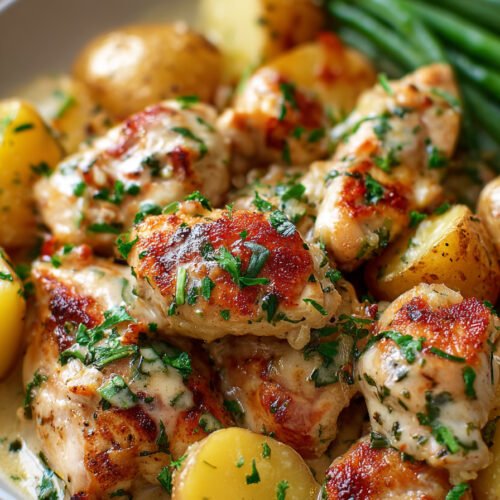
Garlic Parmesan Chicken and Potatoes
Ingredients
- 1 ½ lbs boneless skinless chicken breasts (about 3–4 pieces), patted dry so the seasoning sticks and the chicken roasts instead of steaming
- 1 ½ lbs baby potatoes halved (or quartered if large), cut evenly so they become tender in the same time as the chicken
- 3 tablespoon olive oil divided, used to coat the potatoes and help the chicken stay moist
- 4 cloves garlic minced, divided between the potatoes and chicken for even garlic flavor
- 1 teaspoon Italian seasoning, for a balanced herb base
- ½ teaspoon paprika, for mild color and savory warmth
- ½ teaspoon salt more to taste, with final seasoning adjusted after roasting
- ½ teaspoon black pepper, preferably freshly cracked for better aroma
- ½ cup grated Parmesan cheese, divided so some seasons the chicken and the rest finishes the pan
- 2 tablespoon fresh parsley chopped (for garnish), added at the end for freshness
- 2 tablespoon unsalted butter melted, brushed on after baking for a richer finish
Instructions
- Preheat the oven to 400°F (200°C). Lightly grease a large baking dish or sheet pan, choosing a pan big enough to keep the chicken and potatoes in a mostly even layer.
- In a bowl, toss the potatoes with 2 tablespoons olive oil, half of the minced garlic, Italian seasoning, paprika, salt, and pepper. Spread them evenly onto one side of the prepared pan, keeping the cut sides exposed where possible for better browning.
- Drizzle the chicken breasts with the remaining 1 tablespoon olive oil. Rub them with the rest of the garlic, a pinch of salt, pepper, and half of the Parmesan. Place the chicken on the other side of the pan, leaving a little space between pieces so they bake evenly.
- Roast for 30–35 minutes, flipping the potatoes halfway through. Cook until the chicken reaches an internal temperature of 165°F (74°C) and the potatoes are golden, tender, and easily pierced with a fork.
- Brush the hot chicken and potatoes with melted butter, then sprinkle with the remaining Parmesan cheese while everything is still warm so the cheese clings and softens slightly.
- Garnish with chopped parsley and serve hot. Let the chicken rest for a few minutes before slicing to help the juices settle.
8) Tips for Making Garlic Parmesan Chicken and Potatoes
The biggest texture tip is to cut the potatoes for the chicken, not the other way around. Since boneless chicken breasts cook faster than dense potatoes, the potatoes need to be small enough to finish in 30 to 35 minutes. Halved baby potatoes usually work, but large baby potatoes should be quartered.
Keep the Parmesan divided. Parmesan baked too long can become dry on the pan, but Parmesan added after melted butter clings to the chicken and potatoes with better flavor. This small finishing step makes one pan garlic parmesan chicken and potatoes taste more intentional.
Use the halfway flip as a diagnostic moment. If the potatoes are still very pale and wet at the halfway mark, spread them out more. If the chicken is browning too quickly but still under temperature, loosely shield it with a small piece of foil while the potatoes finish.
9) Common Mistakes & Fixes
Problem: The chicken turns dry. Cause: The chicken roasted past 165°F or the pieces were uneven in thickness. Fix: Check with a thermometer in the thickest part and lightly pound very thick breasts before seasoning.
Problem: The potatoes are still firm. Cause: The potato pieces were too large or packed too closely together. Fix: Cut large baby potatoes into quarters and spread them in a single layer so heat can reach the cut sides.
Problem: The dish tastes flat. Cause: Potatoes need enough salt because their starch absorbs seasoning. Fix: Season the potatoes before roasting, then taste after the Parmesan and butter are added before adding more salt.
Problem: Garlic tastes harsh or uneven. Cause: Garlic was clumped in one spot or not mixed well with the oil. Fix: Divide the garlic and rub or toss it evenly so every bite has balanced flavor.
10) How to Tell Garlic Parmesan Chicken and Potatoes Are Done
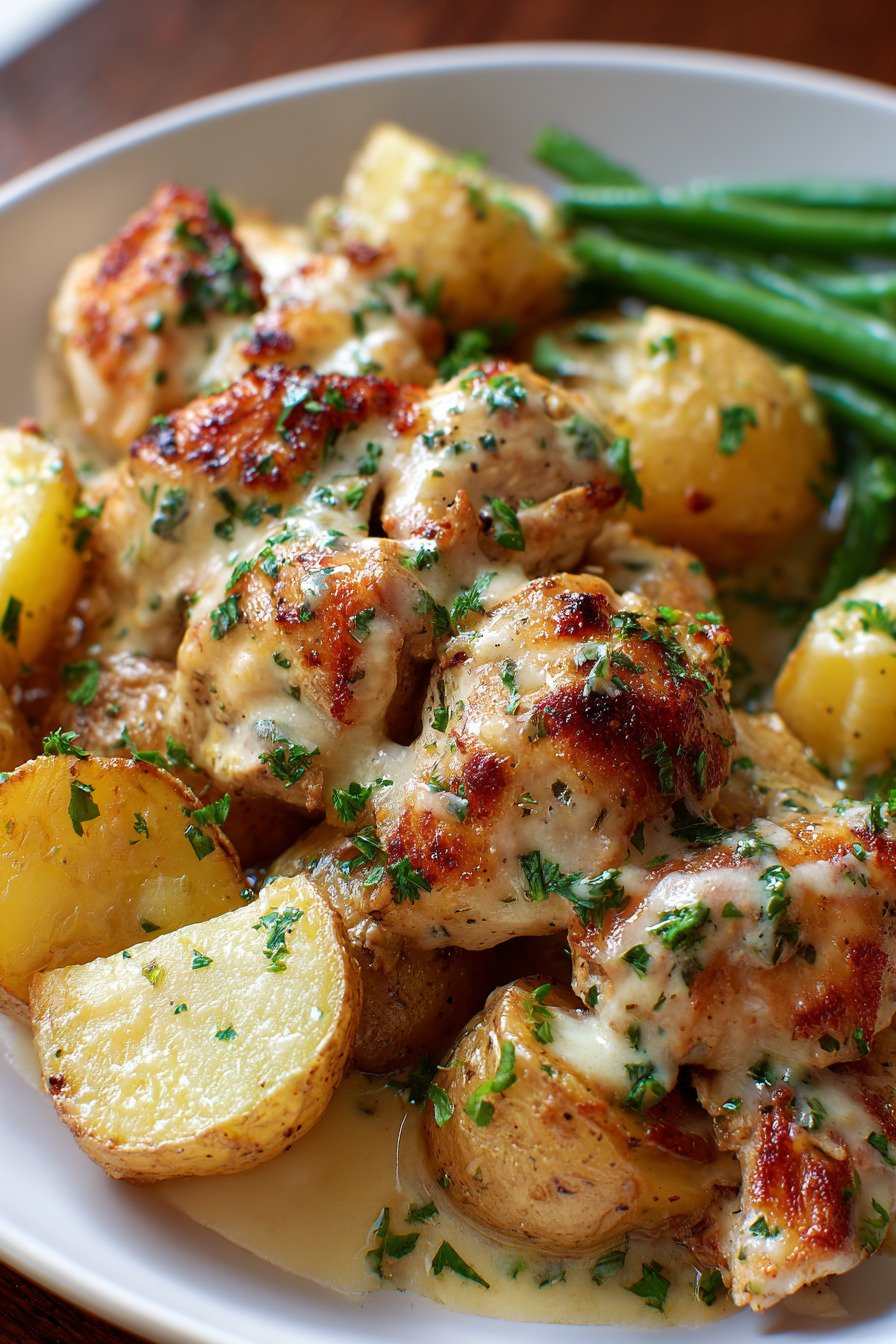
Garlic parmesan chicken and potatoes are done when the chicken reaches 165°F in the thickest part and the potatoes are fork-tender. The chicken should look opaque, juicy when sliced, and lightly coated with melted Parmesan. It should not look stringy, chalky, or dry around the edges.
The potatoes should have golden patches, soft centers, and edges that look lightly roasted rather than wet. When you press a potato with a fork, it should give easily without collapsing into mush. The aroma should be savory, garlicky, buttery, and lightly nutty from the Parmesan.
Failure indicators are easy to spot. Watery pooling means the pan was crowded or the potatoes released too much steam. Pale potatoes usually need more space or a few extra minutes. A burnt garlic smell means garlic pieces were exposed too heavily on dry areas of the pan.
11) Professional Secrets Behind Better Garlic Parmesan Chicken and Potatoes
The first professional habit is drying the chicken before seasoning. A dry surface helps olive oil, garlic, and Parmesan stay in place. Moist chicken can steam on the surface, which weakens flavor and makes the coating slide off.
The second secret is using the pan like two zones. Potatoes go on one side because they need turning and direct contact. Chicken goes on the other side because it needs steady heat and temperature control. Treating them separately on the same pan gives better results than tossing everything together without a plan.
The final secret is finishing hot food while it can still absorb flavor. Melted butter and Parmesan cling better when the chicken and potatoes are fresh from the oven. That finish gives this chicken potato recipes for dinner idea a richer texture without adding another sauce.
12) Best Dishes or Pairings to Serve With Garlic Parmesan Chicken and Potatoes
Garlic parmesan chicken and potatoes already brings protein, starch, garlic, butter, and cheese, so the best pairings are fresh, crisp, or green. A lemony green salad cuts through the richness. Steamed broccoli, green beans, asparagus, or roasted zucchini add color and keep the plate balanced.
For a cozy family dinner, serve it with a cucumber salad, sautéed spinach, or simple carrots. If you want a heartier comfort-food plate, add warm rolls or a light soup before the meal. The dish also works well with a small bowl of plain Greek yogurt or a lemon-herb sauce on the side for brightness.
13) Making Garlic Parmesan Chicken and Potatoes Ahead of Time
You can prep parts of garlic parmesan chicken and potatoes ahead without sacrificing texture. Cut the potatoes earlier in the day and keep them covered in cold water, then drain and dry them well before seasoning. Drying matters because wet potatoes roast poorly and can make the pan steam.
The chicken can be trimmed and patted dry ahead of time, but add the Parmesan closer to baking so it does not become pasty on the surface. The butter and final Parmesan should stay separate until after roasting. That finishing step is what keeps the flavor fresh instead of heavy.
14) Storing Leftover Garlic Parmesan Chicken and Potatoes
Store leftover garlic parmesan chicken and potatoes in an airtight container in the refrigerator for up to 3 days. Let everything cool before sealing the container so trapped steam does not make the potatoes soggy. For best texture, store any extra parsley separately and add it after reheating.
Reheat gently in a covered skillet, oven-safe dish, or microwave at moderate power. If the chicken seems dry, add a small splash of water or a little melted butter before reheating. The potatoes may soften after storage, but a few minutes in a hot skillet can bring back better edges.
15) FAQ (Real Cooking Questions)
Can I use chicken thighs instead of chicken breasts? Yes, boneless skinless thighs can work, but they may need slightly different timing depending on thickness. Always check for a safe internal temperature of 165°F.
Can I use regular potatoes instead of baby potatoes? Yes, but cut them into small, even pieces. Large chunks may not become tender before the chicken is done.
Why did my potatoes not brown? The pan was likely crowded, the potatoes were too wet, or the pieces were too large. Spread them out and make sure they are coated with oil but not dripping.
Can I make this as baked chicken and potatoes in a baking dish? Yes, but choose a large dish. A deep, crowded dish traps steam, while a wider dish gives better browning.
How do I keep the Parmesan from burning? Use only part of the Parmesan before baking and save the rest for the butter finish. This gives the garlic parmesan chicken recipe flavor without drying out all the cheese in the oven.
16) Save This Garlic Parmesan Chicken and Potatoes Recipe
If this Garlic Parmesan Chicken and Potatoes helped you solve the dry chicken and undercooked potato problem, save it for a weeknight dinner or calm Sunday meal. The key reminder is: cut the potatoes evenly, give the pan space, and finish with butter and Parmesan after roasting.
17) Conclusion
Garlic parmesan chicken and potatoes becomes much more dependable when you understand the timing behind the pan. The chicken needs even thickness and a thermometer, while the potatoes need small cuts, oil coverage, and enough room to roast instead of steam. Once those details are in place, the final butter and Parmesan bring the dish together with rich garlic flavor and tender texture. That is the difference between a basic pan dinner and one that feels controlled, comforting, and worth repeating.
18) Nutrition
Serving Size 1 portion Calories 485 Sugar 2 g Sodium 590 mg Fat 22 g Saturated Fat 8 g Carbohydrates 31 g Fiber 4 g Protein 42 g Cholesterol 118 mg

Leave a Comment