

1) What I Learned Testing Ham and Cheese Pinwheels
When ham and cheese pinwheels bake open, leak cheese, or turn soft instead of flaky, the problem is usually in the rolling and filling balance. I’m Linda, and I learned this after testing batches that looked neat before baking but lost their shape in the oven. The discovery was simple: cold puff pastry, thin layers, and a tight seam make ham and cheese puff pastry pinwheels bake into crisp, golden spirals. These puff pastry ham and cheese recipes remind me of calm weekend lunches and holiday appetizer trays, where one small tray can make the whole table feel warmer.
Table of Contents
- 1) What I Learned Testing Ham and Cheese Pinwheels
- 2) Key Takeaways
- 3) Easy Ham and Cheese Pinwheels Recipe
- 4) Why Most Ham and Cheese Pinwheels Recipes Fail
- 5) Ingredients for Ham and Cheese Pinwheels
- 6) How to Make Ham and Cheese Pinwheels
- 7) Recipe Card: Ham and Cheese Pinwheels
- 8) Tips for Making Ham and Cheese Pinwheels
- 9) Common Mistakes & Fixes
- 10) How to Tell Ham and Cheese Pinwheels Are Perfect
- 11) Professional Secrets Behind Better Ham and Cheese Pinwheels
- 12) Best Dishes or Pairings to Serve With Ham and Cheese Pinwheels
- 13) Making Ham and Cheese Pinwheels Ahead of Time
- 14) Storing Leftover Ham and Cheese Pinwheels
- 15) FAQ (Real Cooking Questions)
- 16) Save This Ham and Cheese Pinwheels Recipe
- 17) Conclusion
- 18) Nutrition
2) Key Takeaways
- Cold puff pastry gives the best lift: If the pastry gets warm or sticky, the butter layers soften before baking and the pinwheels lose their crisp edges.
- A thin filling layer matters: Too much ham, cheese, or mustard can make the centers heavy and cause the spirals to open.
- The seam is the shape insurance: Pinching the long edge closed helps each slice hold its spiral while the cheese melts.
- Golden color is not the only cue: The pinwheels should look puffed, crisp at the edges, and set in the center before they come off the tray.
3) Easy Ham and Cheese Pinwheels Recipe
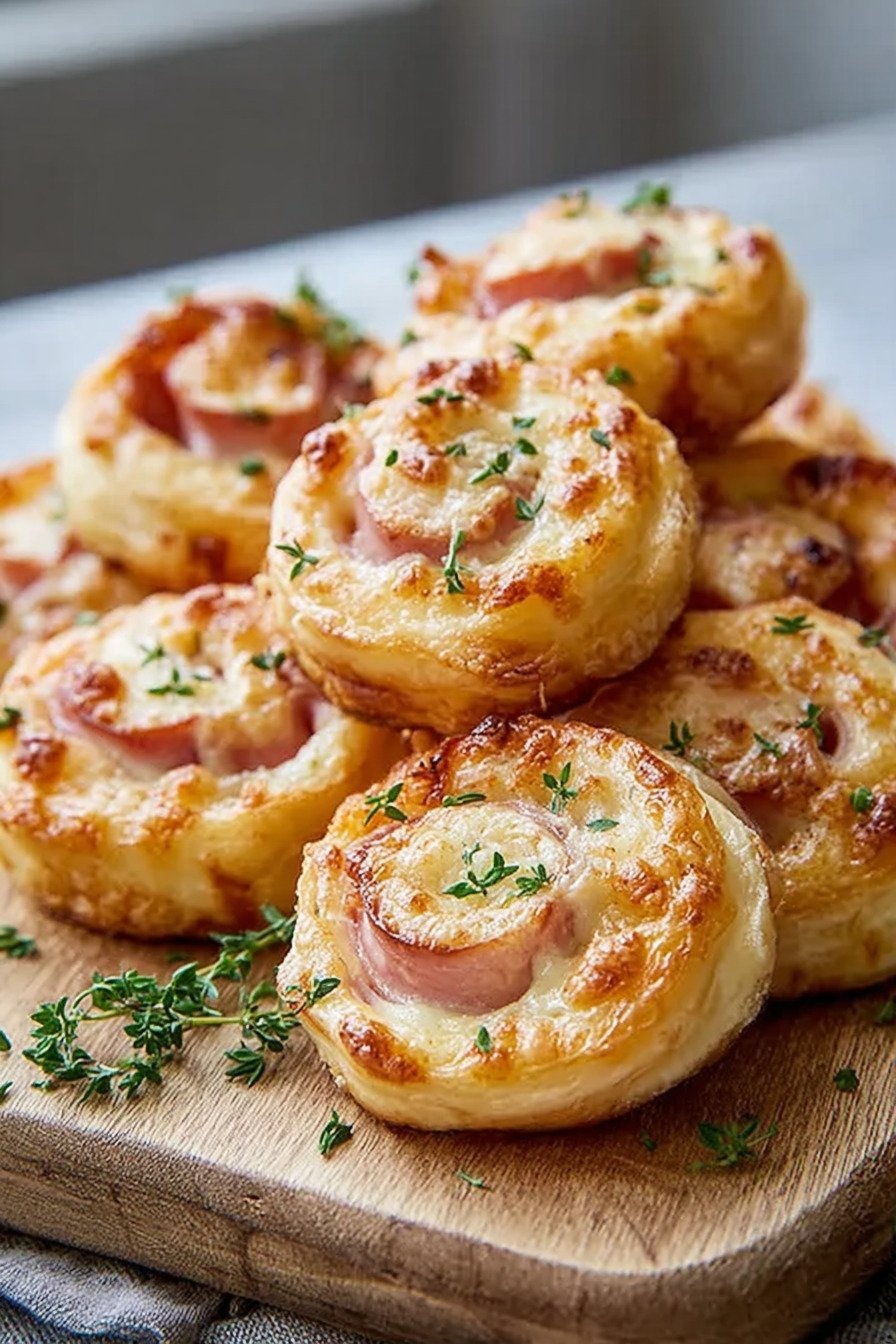
Ham and Cheese Pinwheels work because they use a high-impact filling inside a delicate pastry structure. Puff pastry already brings butter, steam, and flake; the cook’s job is to avoid weighing it down. Thinly sliced ham gives savory structure without bulk, shredded Swiss or cheddar melts into the layers, and a small amount of Dijon adds sharpness without turning the pastry wet. This is why ham and cheese puff pastry pinwheels are one of the most useful savory puff pastry appetizer recipes for gatherings: the method is simple, but the texture depends on small choices that make a visible difference.
The goal is a pinwheel that feels light when lifted, not greasy or compressed. The outside should shatter slightly when bitten, while the center stays tender with melted cheese and warm ham. If the pastry is rolled too loosely, the spirals spread. If the filling is piled too thickly, the centers steam instead of puff. When the filling is even and the roll is tight, the oven heat creates neat, golden rounds with defined layers.
4) Why Most Ham and Cheese Pinwheels Recipes Fail
Most Ham and Cheese Pinwheels fail because puff pastry is sensitive to temperature, moisture, and weight. The first issue is warm pastry. When puff pastry sits too long at room temperature, the butter softens into the dough instead of creating steam pockets. The result is flatter pastry with less lift. If the pastry feels sticky while rolling, that is a sign it needs a short chill before slicing or baking.
The second problem is too much moisture. Ham with a heavy glaze, a thick layer of Dijon, or wet herbs can soften the inside of the pastry. This method prevents that by using thin ham, optional mustard spread lightly, and chopped chives in a small amount. The third failure is overfilling. Puff pastry recipes savory pinwheels need enough filling for flavor, but not so much that the pastry cannot expand.
The fourth issue is loose rolling. A loose log leaves air gaps that open as the cheese melts. Starting from the long edge and rolling firmly gives smaller, cleaner spirals. The final common problem is underbaking. Pale puff pastry may look done because the cheese is melted, but the dough can still be soft. Look for golden tops, crisp edges, and visible puff before removing the tray.
5) Ingredients for Ham and Cheese Pinwheels
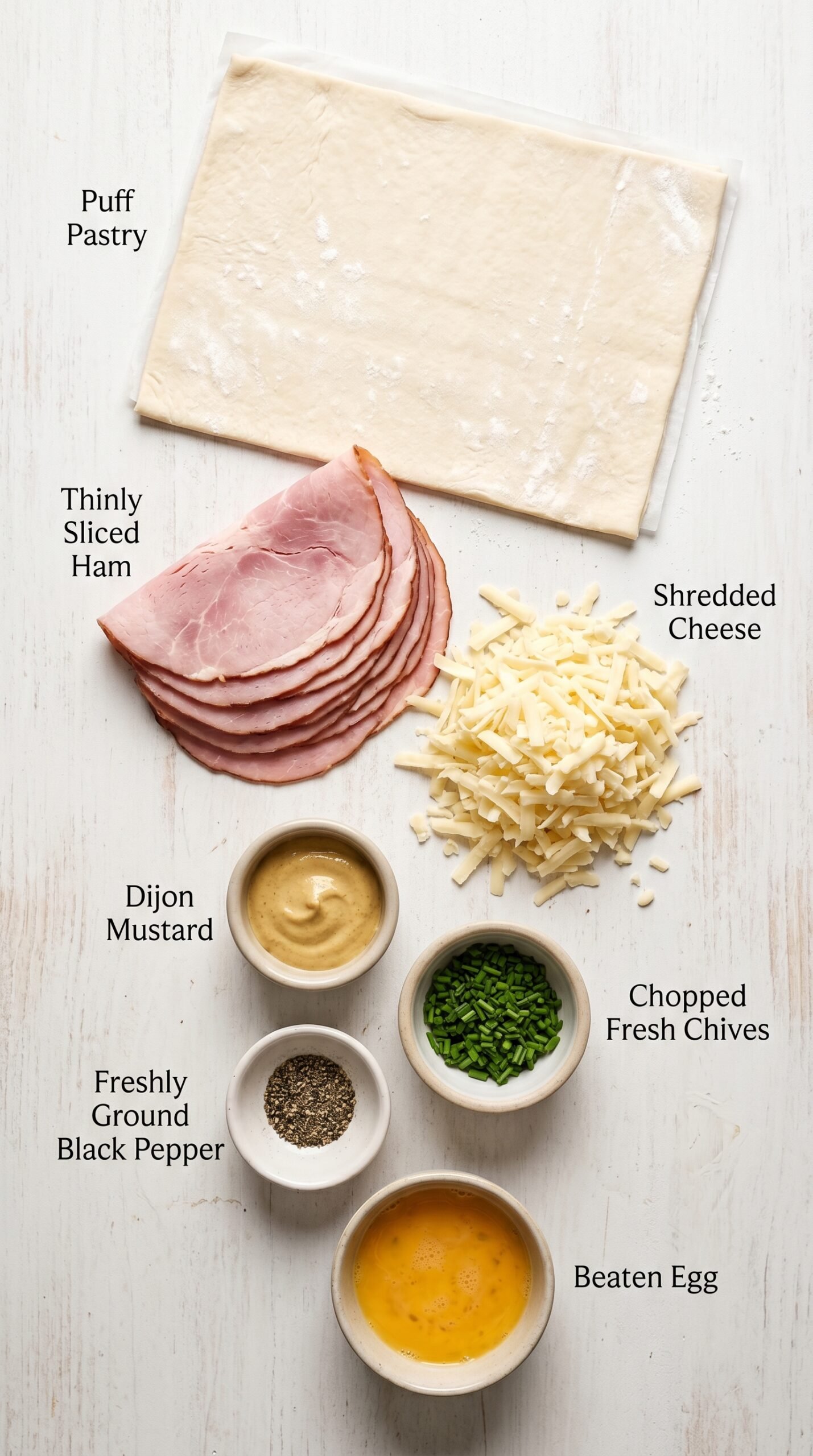
Puff pastry: One thawed sheet, about 9 ounces, is the structure of the recipe. Use it when cold but flexible, because cold pastry puffs higher and cuts cleaner. If it is too frozen, it cracks; if it is too warm, it stretches and bakes flat.
Thinly sliced ham: Ham adds savory depth and a soft, meaty layer inside the pastry. Choose moderate-fat ham with minimal glaze because excess sugar or moisture can make the spirals sticky and soft. Thin slices layer more evenly than thick pieces.
Swiss or cheddar cheese: Shredded Swiss gives a nuttier flavor, while cheddar gives a familiar sharper melt. Block cheese is better when you can shred it yourself because it melts smoother and avoids the powdery coating often found on pre-shredded cheese.
Dijon mustard: Dijon is optional, but it gives the filling a tangy lift that cuts through the richness of the ham and cheese. Use it thinly and leave a border, because too much mustard can make the pastry wet and harder to seal.
Fresh chives: Chives are optional, but they add fresh onion flavor without the moisture or sharpness of raw onion. They work best sprinkled lightly over the cheese so every bite gets a little freshness.
Freshly ground black pepper: Pepper adds warmth and balances the salty ham and cheese. Add it lightly because the filling already has plenty of seasoning.
Beaten egg: Egg wash gives the tops a glossy, golden finish. It also helps the pastry color evenly, which is important because pale puff pastry usually means the texture is still soft.
- Cold pastry vs warm pastry: Cold pastry holds its layers and puffs cleanly; warm pastry stretches, sticks, and often bakes flatter.
- Block cheese vs pre-shredded cheese: Block cheese melts more smoothly, while pre-shredded cheese can melt drier because of anti-caking starches.
- Thin ham vs thick ham: Thin ham rolls neatly and keeps the spirals even; thick ham can make the log bulky and harder to slice.
- Thin mustard vs thick mustard: A thin layer adds flavor; a heavy layer can create a damp line inside the pastry.
6) How to Make Ham and Cheese Pinwheels
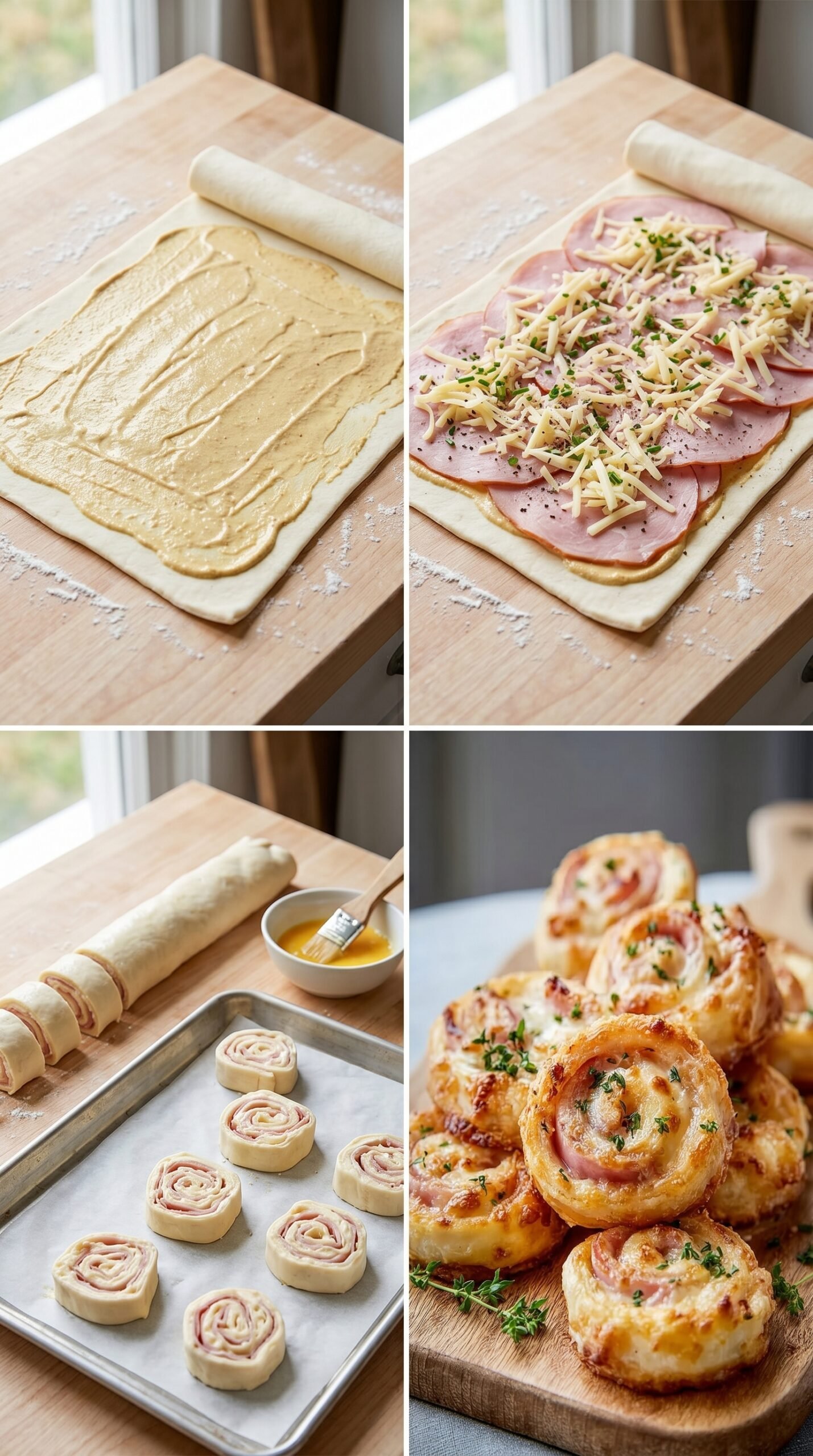
Step 1: Preheat the oven to 400°F and line a baking sheet with parchment paper. A fully heated oven is important because puff pastry needs strong heat right away to create steam and lift the layers.
Step 2: Unroll the thawed puff pastry on a lightly floured surface. The pastry should feel cool, smooth, and flexible. If it feels sticky or greasy, pause and chill it briefly before adding the filling.
Step 3: Spread Dijon mustard thinly across the pastry if using it, leaving a 1/2-inch border. That border helps the seam seal and prevents the filling from squeezing out when the log is rolled.
Step 4: Layer the ham over the mustard, then sprinkle the cheese and chives evenly on top. Keep the filling level rather than mounded. Even filling helps each slice bake at the same pace.
Step 5: Roll from the long edge into a tight log and pinch the seam closed. Slice into 16 even pieces, place cut side up, brush with beaten egg, and bake for 15–18 minutes until puffed and golden. Let them cool briefly so the cheese settles and the edges stay crisp.
7) Recipe Card: Ham and Cheese Pinwheels

Ham and Cheese Pinwheels with Flaky Puff Pastry
Ingredients
- 1 sheet puff pastry, thawed if frozen, about 9 ounces; keep it cold but flexible so it rolls without tearing.
- 5 ounces thinly sliced ham; choose moderate-fat ham with minimal glaze to avoid excess moisture.
- 3.5 ounces shredded Swiss or cheddar cheese; shred from a block for smoother melting and less oiliness.
- 1 tablespoon Dijon mustard, optional; spread very thinly for tangy flavor without making the pastry wet.
- 1 tablespoon chopped fresh chives, optional; adds a mild onion note and fresh color.
- Freshly ground black pepper, to taste; use lightly because ham and cheese already contain salt.
- 1 egg, beaten; used as an egg wash for a glossy golden top.
Instructions
- Preheat the oven to 400°F and line a baking sheet with parchment paper so the cheese does not stick as it melts.
- Unroll the thawed puff pastry onto a lightly floured surface, keeping the sheet cool and flat so the layers stay distinct.
- If using Dijon, spread it in a very thin layer across the pastry, leaving a 1/2-inch border to help seal the roll.
- Layer the ham evenly over the mustard, then scatter the shredded cheese and chopped chives over the top without overfilling the edges.
- Starting from the long edge, roll the pastry into a tight log and pinch the seam closed so the pinwheels hold their spiral shape during baking.
- Slice the log into 16 even pieces with a sharp knife, then place them cut side up on the prepared baking sheet with a little space between each one.
- Brush the tops with beaten egg and bake for 15–18 minutes, until the pastry is puffed, deeply golden, and crisp around the edges.
- Let the pinwheels cool for a few minutes before serving so the cheese settles and the pastry finishes crisping.
8) Tips for Making Ham and Cheese Pinwheels
The most useful tip for ham and cheese puff pastry pinwheels is to treat the pastry like a temperature-sensitive dough, not like a tortilla wrap. Puff pastry needs visible butter layers to rise. If the sheet becomes limp while you are layering the filling, move it to the refrigerator for a few minutes before rolling. That small pause can be the difference between high, flaky rounds and flat, greasy spirals.
Use a sharp knife for slicing and avoid pressing straight down with force. A dull knife compresses the spiral and seals the pastry layers together, which limits puffing. A gentle sawing motion keeps the rounds round. If you want very clean slices for a party tray, chill the rolled log for 10 minutes before cutting.
For appetizer recipes with puff pastry, spacing matters more than it seems. Leave room between each pinwheel so hot air can circulate around the sides. Crowded pinwheels steam against each other and soften where they touch. The best tray has golden tops, crisp exposed edges, and a little melted cheese visible without large leaks.

9) Common Mistakes & Fixes
Problem: The pinwheels open during baking. Cause: The log was rolled loosely, the seam was not pinched, or the filling was too thick near the edge. Fix: Roll from the long side with steady pressure, leave a clean border, and pinch the seam firmly before slicing.
Problem: The pastry turns soft underneath. Cause: The filling was too wet, the ham had too much glaze, or the pinwheels were removed before the pastry fully browned. Fix: Use thin, drier ham, spread Dijon lightly, and bake until the edges are golden and crisp.
Problem: Cheese leaks heavily onto the pan. Cause: The cheese was piled too close to the border or the slices were uneven. Fix: Sprinkle cheese evenly, avoid overfilling the edges, and cut the log into similar-sized pieces so they bake evenly.
Problem: The pinwheels look pale but the cheese is melted. Cause: Melted cheese happens faster than puff pastry browning. Fix: Trust the pastry cues, not just the filling. Wait for puffed layers, golden tops, and crisp edges.
10) How to Tell Ham and Cheese Pinwheels Are Perfect
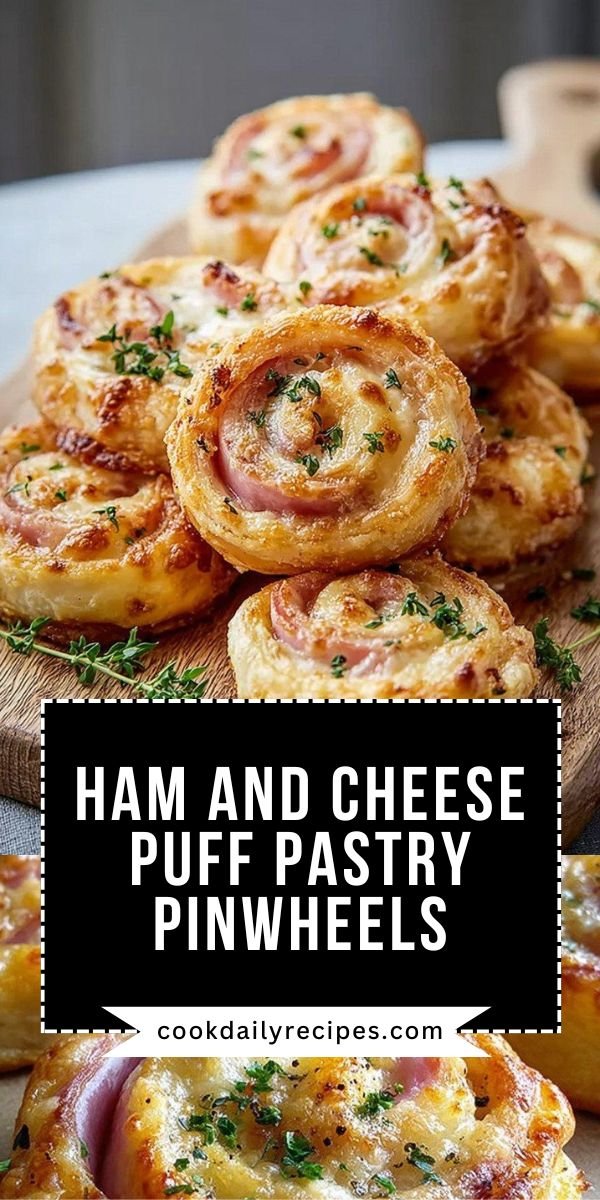
Perfect Ham and Cheese Pinwheels should look puffed and rounded, not collapsed or greasy. The tops should be golden from the egg wash, the sides should show flaky pastry layers, and the cheese should be melted without flooding the tray. A little bubbling cheese is normal; large puddles usually mean the filling was too heavy or placed too close to the edge.
The texture should feel crisp at the outer edge and tender in the center. When you lift one from the tray, it should hold its shape instead of bending like soft bread. The aroma should be buttery and savory, with the ham and cheese coming through clearly. If the center seems doughy, the tops are pale, or the pastry feels damp underneath, the pinwheels need more time in the oven.
11) Professional Secrets Behind Better Ham and Cheese Pinwheels
The professional secret is restraint. Puff pastry is already rich, so the filling should season it rather than bury it. A thin layer of Dijon, a single even layer of ham, and a moderate amount of cheese let the pastry rise instead of steaming under a heavy center. This is why the best ham and cheese puff pastries look defined after baking, with visible spirals and crisp edges.
Another helpful technique is controlling the seam. Place the seam side down or pinch it well before slicing so each piece has a stronger outer edge. When brushing with egg wash, coat the tops lightly instead of soaking the sides. Too much egg wash can drip down and glue the pastry layers together, limiting the lift that makes puff pastry recipes savory pinwheels so appealing.
12) Best Dishes or Pairings to Serve With Ham and Cheese Pinwheels
Ham and Cheese Pinwheels work well with crisp, fresh sides because the pastry is buttery and the filling is salty. Serve them with a green salad, cucumber slices, cherry tomatoes, or a simple fruit platter for contrast. For brunch, they fit nicely beside scrambled eggs, roasted potatoes, or a bowl of berries. For a party board, pair them with pickles, olives, mustard, and fresh vegetables to balance the richness.
If you are serving them as part of a warm appetizer spread, choose dishes that do not compete with the same texture. A creamy dip, a crunchy vegetable tray, and one lighter bite make the table feel more balanced. These pinwheels are especially useful when you want a recipe with puff pastry sheets that feels homemade but does not require shaping individual pastries one by one.


13) Making Ham and Cheese Pinwheels Ahead of Time
Ham and Cheese Pinwheels can be assembled ahead if you protect the pastry from moisture. Roll the filled pastry into a tight log, wrap it well, and refrigerate it until you are ready to slice and bake. For the cleanest shape, slice the chilled log while it is still firm. Brush with egg wash right before baking, not before storing, so the tops stay fresh and do not become sticky.
If you need to prepare them for a party, bake them close to serving time whenever possible. Puff pastry is at its best when freshly baked because the edges are crisp and the center is warm. If timing is tight, bake them earlier in the day and reheat briefly in the oven to bring back the flaky texture.
14) Storing Leftover Ham and Cheese Pinwheels
Store leftover Ham and Cheese Pinwheels in an airtight container in the refrigerator once they have cooled. They keep best for up to 3 days. The pastry will soften as it sits because the filling contains moisture, so reheating matters. Use a 350°F oven until the edges feel crisp again and the cheese is warm. Avoid microwaving if texture is important, because it makes puff pastry chewy and soft.
For longer storage, baked pinwheels can be frozen, but the texture will be better if they are reheated from frozen in the oven rather than thawed first. Place them on a parchment-lined tray and heat until the pastry refreshes and the center is hot. Leftover pinwheels can also be served with soup or salad for a quick lunch.
15) FAQ (Real Cooking Questions)
Can I use cheddar instead of Swiss? Yes. Cheddar gives a sharper, more familiar flavor, while Swiss tastes nuttier and slightly more savory. For smoother melting, shred either cheese from a block.
Why did my pinwheels unroll in the oven? The seam probably was not sealed tightly, or the filling reached too close to the edge. Leave a border, roll firmly, and pinch the seam before slicing.
Can I make these without Dijon mustard? Yes. Dijon is optional. Without it, the flavor is milder and more buttery. If you skip it, black pepper and chives become more noticeable.
Can I use other meats? You can use thinly sliced turkey or roast beef as an optional variation, but keep the slices thin and avoid wet deli meats. The core method works best when the filling is not bulky.
How do I keep the bottoms from getting soggy? Use parchment paper, avoid wet ham or heavy mustard, give the pinwheels space, and bake until the pastry is fully golden. Reheat leftovers in the oven, not the microwave.
16) Save This Ham and Cheese Pinwheels Recipe
If this Ham and Cheese Pinwheels recipe helped you solve the problem of soft pastry or messy spirals, save it for brunch, holiday trays, and quick appetizer planning. The key reminder is: keep the pastry cold, spread the filling thinly, and roll the seam tight for flaky, golden pinwheels.
17) Conclusion
Ham and Cheese Pinwheels look simple, but the best results come from understanding how puff pastry behaves. Once you know why cold pastry matters, why thin filling protects the layers, and why a tight seam keeps the spirals neat, the recipe becomes much more reliable. Instead of hoping the pinwheels hold together, you can read the dough, control the moisture, and bake them until the edges are crisp, golden, and light.
That is the real transformation: a basic tray of ham, cheese, and pastry becomes a confident appetizer because every step has a purpose. Keep the filling balanced, watch the color, and let the pinwheels cool briefly before serving. Those small details create the flaky texture and savory center that make this recipe worth repeating.

18) Nutrition
Serving Size 1 portion Calories 118 Sugar 1 g Sodium 214 mg Fat 8 g Saturated Fat 4 g Carbohydrates 8 g Fiber 0 g Protein 5 g Cholesterol 25 mg




Leave a Comment