

What I Learned Testing This Healthy Potato Salad Recipe
Potato salad can go from creamy and fresh to watery, bland, or mushy faster than most cooks expect. I’m Linda, and my first lighter versions failed because I dressed the potatoes while they were too warm and under-seasoned the bowl after chilling. After testing the cooling time, yogurt-to-mustard balance, and herb timing, I discovered that a healthy potato salad works best when the potatoes stay firm, the dressing tastes bright, and the crunch is added gently. This healthy potato salad recipe became the calm, reliable summer potato salad I reach for when I want something fresh but still comforting.
Table of Contents
- 1) What I Learned Testing This Healthy Potato Salad Recipe
- 2) Key Takeaways
- 3) Easy Healthy Potato Salad Recipe
- 4) Why Most Healthy Potato Salad Recipes Fail
- 5) Ingredients for Healthy Potato Salad Recipe
- 6) How to Make Healthy Potato Salad Recipe
- 7) Recipe Card: Healthy Potato Salad Recipe
- 8) Tips for Making Healthy Potato Salad Recipe
- 9) Common Mistakes & Fixes
- 10) How to Tell Healthy Potato Salad Has the Right Texture
- 11) Professional Secrets Behind Better Healthy Potato Salad Recipe
- 12) Best Dishes or Pairings to Serve With Healthy Potato Salad Recipe
- 13) Making Healthy Potato Salad Recipe Ahead of Time
- 14) Storing Leftover Healthy Potato Salad Recipe
- 15) FAQ (Real Cooking Questions)
- 16) Save This Healthy Potato Salad Recipe
- 17) Conclusion
- 18) Nutrition
2) Key Takeaways
- Cool the potatoes before dressing: Warm potatoes can break apart and loosen the Greek yogurt dressing, so a short cooling step protects texture.
- Balance creaminess with acidity: Greek yogurt gives body, Dijon adds sharpness, and apple cider vinegar keeps the salad from tasting heavy.
- Keep the crunch fresh: Celery, green onions, and optional cucumber should stay crisp, so fold them in gently instead of stirring aggressively.
- Season after chilling: Potatoes absorb salt as they rest, which means the final taste check matters more than the first one.
3) Easy Healthy Potato Salad Recipe
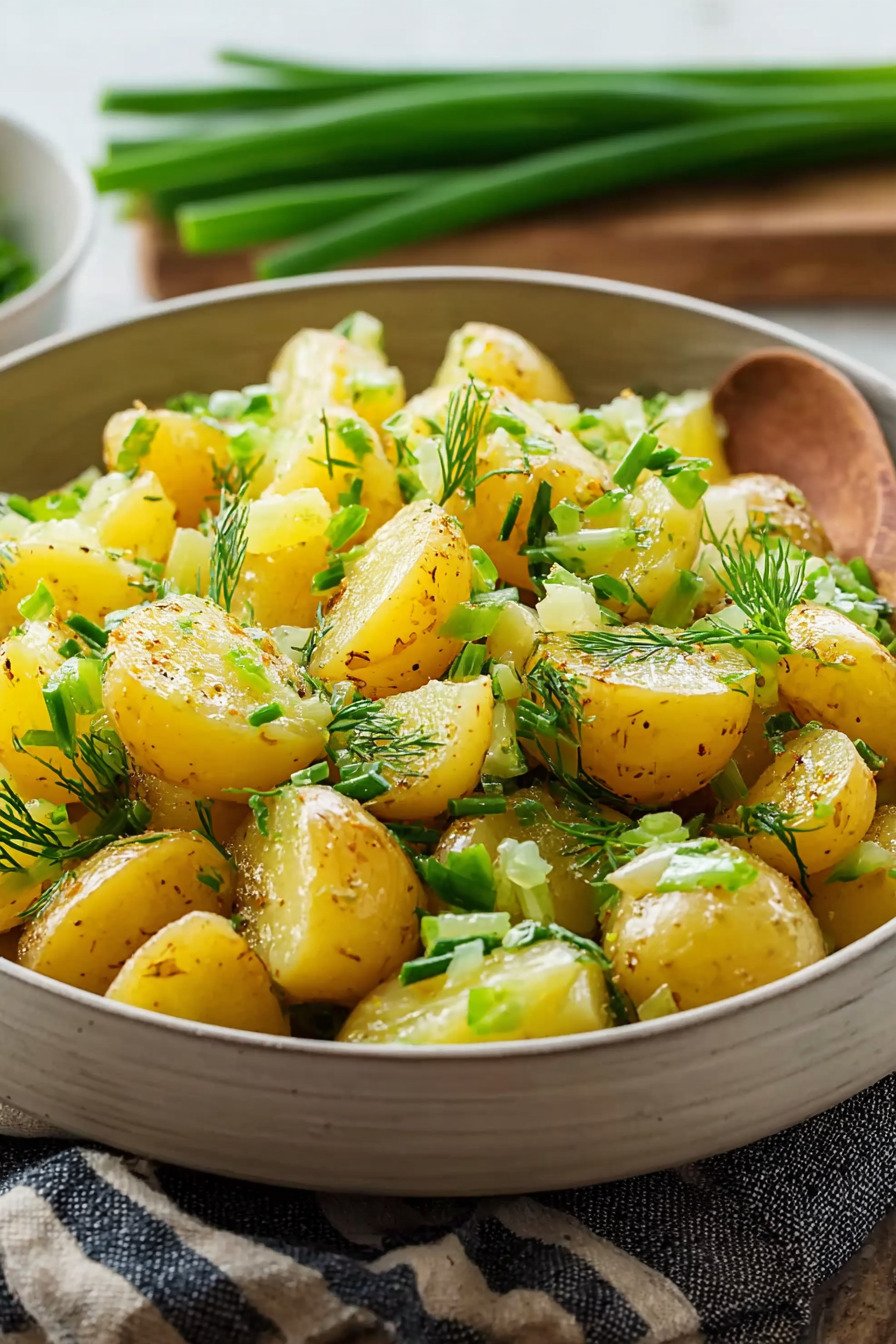
This easy healthy potato salad is built around firm baby potatoes, a tangy Greek yogurt dressing, and fresh herbs that make the bowl feel bright instead of heavy. The goal is not to imitate a mayonnaise-heavy potato salad. The goal is a creamy, cool, herb-forward side dish where the potatoes still hold their shape and the dressing clings lightly instead of pooling at the bottom.
The method works because it controls moisture at the right moments. Starting the potatoes in salted cold water helps them cook evenly from the center outward. Draining and spreading them out lets excess steam escape. Waiting before adding the dressing keeps the yogurt from thinning out too much, which is one of the biggest reasons a healthy potato salad recipe can taste watery.
The flavor also builds in layers. Dijon mustard gives the dressing structure and sharpness, apple cider vinegar adds brightness, olive oil rounds out the tang, and fresh dill plus parsley bring the clean aroma that makes this feel like a true summer potato salad.
4) Why Most Healthy Potato Salad Recipes Fail
Most healthy potato salad recipes fail because the potatoes are treated like a background ingredient instead of the main texture. If the potatoes are overcooked, they absorb water, split at the edges, and collapse when mixed. The fix is to cook them only until fork-tender, with a little resistance in the center, so they stay creamy inside but firm enough for tossing.
Another common failure is watery dressing. Greek yogurt is creamy, but it can loosen when mixed with hot potatoes or vegetables that release moisture. Cooling the potatoes for at least 10 minutes and draining them well prevents the dressing from turning thin. If cucumber is used, it is best added close to serving because it naturally releases water as it sits.
Flat flavor is also common in a simple potato salad recipe because cold potatoes dull seasoning. Salt in the cooking water gives the potatoes a better base flavor, but the salad still needs a final adjustment after chilling. A splash of vinegar can wake up the dressing, while a small drizzle of olive oil can soften too much sharpness.
The last problem is aggressive mixing. When potatoes are stirred too hard, the edges smear into the dressing and create a pasty texture. Gentle folding keeps the salad looking clean, preserves the pieces, and gives every bite contrast between creamy dressing, tender potato, and crisp vegetables.
5) Ingredients for Healthy Potato Salad Recipe
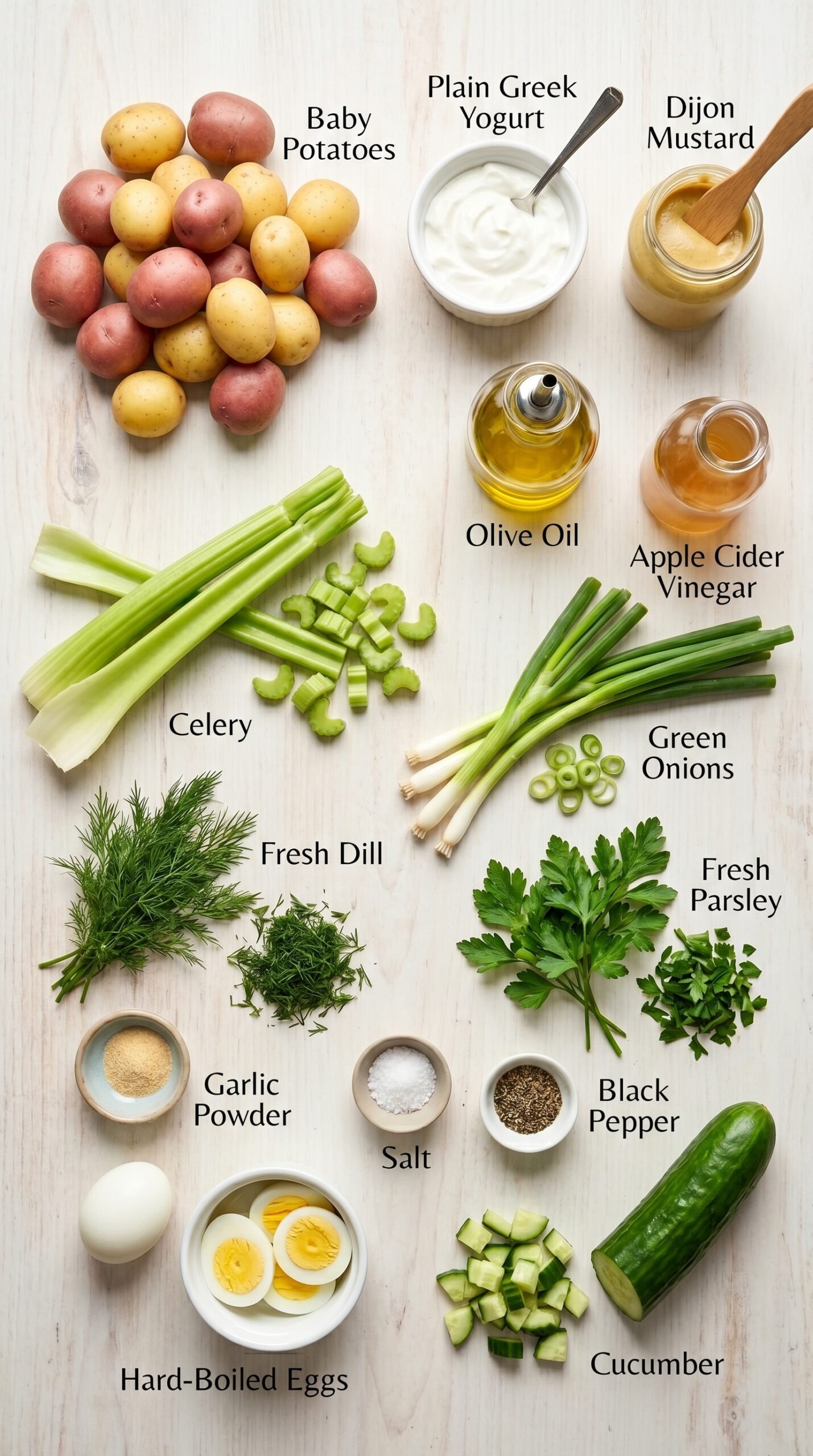
Baby potatoes: Baby red or yellow potatoes hold their shape better than large starchy potatoes, making them ideal when you want a creamy salad that does not turn mashed. Use them halved so they cook evenly; if replaced with very floury potatoes, the salad may break down faster.
Plain Greek yogurt: Greek yogurt creates the creamy base while keeping the dressing tangy and lighter than a heavy mayonnaise dressing. Full-fat gives a rounder texture, while low-fat keeps the salad leaner but slightly sharper.
Dijon mustard: Dijon adds savory depth and helps the dressing taste intentional instead of just creamy. It is especially useful in a healthy side dish salad because it gives punch without needing a lot of extra fat.
Olive oil: Olive oil smooths the yogurt and helps carry the herb flavor. Add it to the dressing before the potatoes so it disperses evenly instead of coating only a few pieces.
Apple cider vinegar: Vinegar brightens the potatoes and balances the yogurt. If the salad tastes dull after chilling, a tiny splash more vinegar can bring the flavor back without making the bowl watery.
Celery: Celery gives the salad its crisp bite. Chop it finely so the crunch is evenly distributed and does not overpower the soft potatoes.
Green onions: Green onions add mild onion flavor without the harshness of raw yellow onion. Slice them thinly so they blend into the dressing and herbs.
Fresh dill: Dill gives the salad a fresh, classic potato salad aroma. Fresh dill tastes brighter, while dried dill works when added sparingly because its flavor is more concentrated.
Fresh parsley: Parsley adds color and a clean herbal finish. It is most useful near the end because it keeps the salad tasting fresh after chilling.
Garlic powder: Garlic powder gives steady savory flavor throughout the dressing. It blends more evenly than raw garlic, which can taste sharp in a chilled salad.
Salt and black pepper: Salt seasons the potatoes and dressing, while black pepper adds a gentle bite. Adjust both after chilling because cold potatoes absorb seasoning as they rest.
Optional hard-boiled eggs or cucumber: Eggs add richness and protein, while cucumber adds a cool crunch. Use them as toppings so the salad keeps its main texture and does not become too wet.
- Baby potatoes vs large russet potatoes: Baby potatoes stay intact and creamy, while russets can become crumbly or pasty if mixed too firmly.
- Greek yogurt vs mayonnaise: Greek yogurt gives tang and body with a lighter finish, while mayonnaise gives more richness but can make the salad feel heavier.
- Warm potatoes vs cooled potatoes: Warm potatoes absorb flavor quickly but can break down in yogurt dressing; cooled potatoes keep the salad neater and firmer.
- Fresh herbs vs dried herbs: Fresh dill and parsley give a brighter finish, while dried dill is stronger and should be used in a smaller amount.
6) How to Make Healthy Potato Salad Recipe
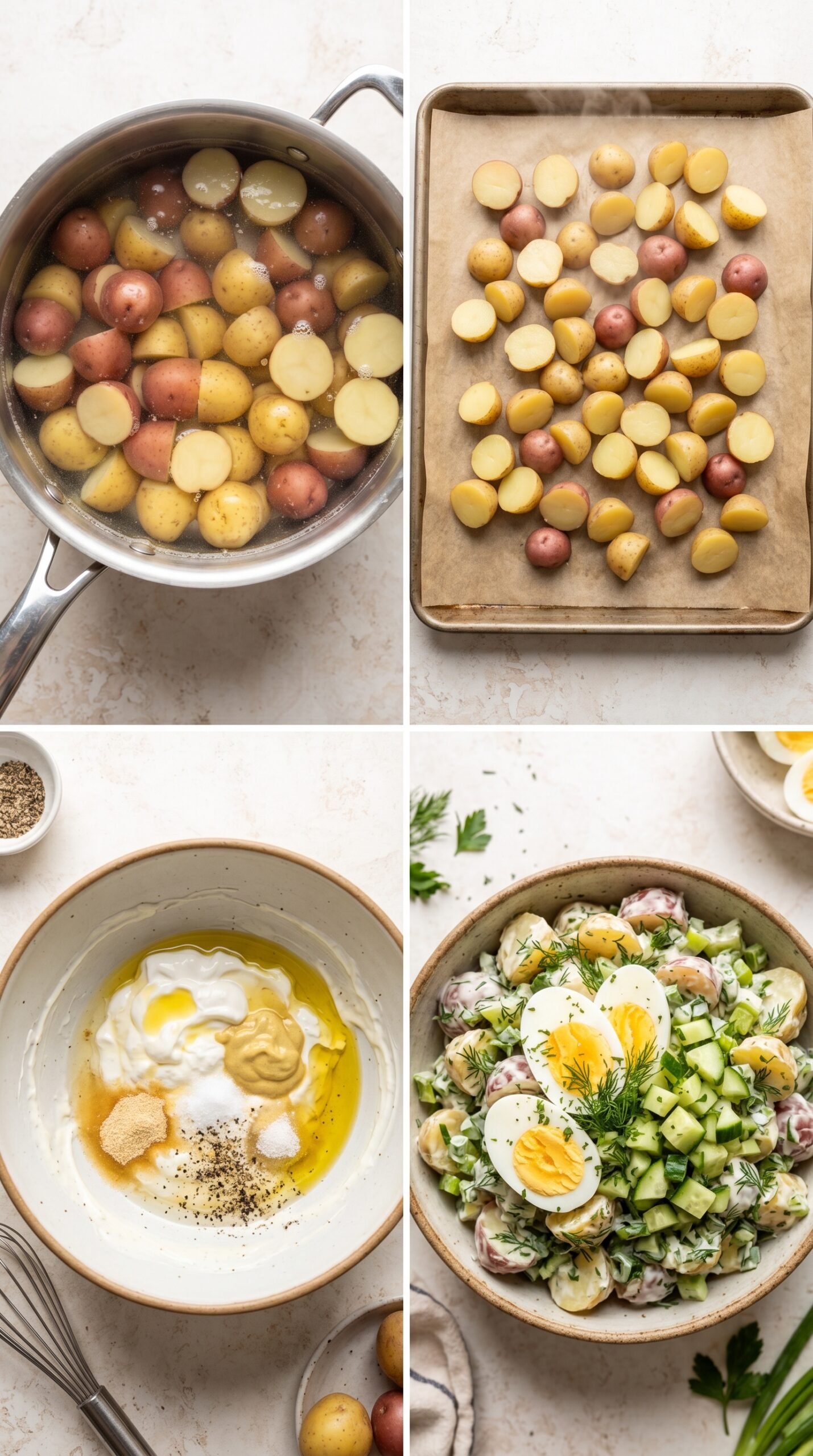
Step 1: Halve the baby potatoes and place them in salted cold water. Starting cold helps the potatoes cook evenly instead of becoming soft outside and firm inside. Boil for 12–15 minutes, checking for a fork-tender texture with just enough resistance to hold shape.
Step 2: Drain the potatoes well and spread them out on a baking sheet or large plate. This step lets steam escape, which keeps extra moisture from thinning the dressing. Give them at least 10 minutes before tossing.
Step 3: Whisk Greek yogurt, Dijon mustard, olive oil, and apple cider vinegar until smooth. Add garlic powder, salt, and black pepper, then taste the dressing before adding the potatoes. It should taste tangy, savory, and slightly bold because the potatoes will mellow it.
Step 4: Add the cooled potatoes, celery, green onions, dill, and parsley. Fold gently with a spatula rather than stirring in circles. The goal is to coat the potatoes without smashing the edges into the dressing.
Step 5: Taste and adjust. Add vinegar for more brightness, olive oil for a smoother finish, or salt and pepper if the potatoes taste muted. Chill for at least 20 minutes so the flavors settle, then top with eggs or cucumber if using.
7) Recipe Card: Healthy Potato Salad Recipe
Healthy Potato Salad Recipe (Quick & Simple)
Ingredients
- 1.5 lbs baby potatoes (red or yellow work great), halved so they cook evenly while staying firm enough for salad
- ½ cup plain Greek yogurt (full-fat or low-fat), used for a creamy, tangy dressing without making the salad heavy
- 2 tbsp Dijon mustard, adds sharpness and helps balance the mild potatoes
- 2 tbsp olive oil, smooths the dressing and gives the salad a richer mouthfeel
- 1 tbsp apple cider vinegar, brightens the flavor and keeps the dressing from tasting flat
- 2 celery stalks, finely chopped, for crisp texture and fresh crunch
- 3 green onions, sliced, for mild onion flavor without overpowering the salad
- 2 tbsp fresh dill, chopped (or 1 tsp dried), adds a classic fresh potato salad aroma
- 2 tbsp fresh parsley, chopped, brings clean herbal flavor and color
- 1 tsp garlic powder, gives steady savory flavor throughout the dressing
- Salt and black pepper to taste, adjusted after chilling because potatoes absorb seasoning as they rest
- Optional: 2 hard-boiled eggs, sliced; ½ cup cucumber, diced, added on top for extra protein, freshness, or crunch
Instructions
- Halve the baby potatoes and place them in a pot of salted cold water. Bring to a boil, then cook for 12–15 minutes, or until a fork slides in with light resistance. Do not overcook; the potatoes should be tender but still firm enough to hold their shape.
- Drain the potatoes well and spread them out on a baking sheet or large plate. Let them cool for at least 10 minutes so surface moisture evaporates and the potatoes stop steaming. Tossing them while very warm can make the salad break down and turn mushy.
- In a large mixing bowl, whisk together the Greek yogurt, Dijon mustard, olive oil, and apple cider vinegar until smooth. Season with garlic powder, salt, and black pepper, tasting for a balance of creamy, tangy, and savory flavors.
- Add the cooled potatoes to the bowl with celery, green onions, dill, and parsley. Gently fold everything together with a spatula until the potatoes are evenly coated, taking care not to crush the pieces.
- Taste and adjust the seasoning. Add a small splash of apple cider vinegar if the salad needs more brightness, a drizzle of olive oil if it tastes too sharp, or more salt and pepper if the potatoes taste muted.
- Cover and refrigerate for at least 20 minutes before serving. This short chill helps the dressing thicken slightly, lets the herbs perfume the salad, and gives the potatoes time to absorb flavor.
- Top with sliced hard-boiled eggs or diced cucumber if using, then finish with a little extra fresh herbs. Serve chilled or cool, not hot, for the cleanest texture and best flavor balance.
8) Tips for Making Healthy Potato Salad Recipe
The most important texture tip is to stop boiling before the potatoes split open. If several pieces start crumbling in the pot, they are already moving toward a mashed texture. For clean salad pieces, check early and drain as soon as the fork slides in without forcing.
Do not trap steam after draining. Spreading the potatoes out gives moisture a place to escape. If they sit piled in a colander, the bottom pieces keep steaming and may turn softer than the top pieces.
Make the dressing slightly more flavorful than you think it should be before adding potatoes. Potatoes are mild and absorb seasoning, especially after chilling. A dressing that tastes balanced by itself may taste too quiet once it coats the whole bowl.
For meal prep potato salad, keep delicate toppings separate until serving. Cucumber is refreshing, but it releases water. Hard-boiled eggs hold better, but they look and taste fresher when placed on top rather than folded through the whole bowl.
9) Common Mistakes & Fixes
Problem: The potatoes fall apart. Cause: They were boiled too long or stirred too hard after dressing. Fix: Cook only until fork-tender, cool them first, and fold gently instead of mixing aggressively.
Problem: The dressing turns watery. Cause: The potatoes were too warm or too wet when added, or cucumber was mixed in too early. Fix: Drain well, spread the potatoes out to release steam, and add cucumber right before serving.
Problem: The salad tastes bland after chilling. Cause: Potatoes absorb seasoning and cold temperatures dull flavor. Fix: Taste again after chilling and adjust with salt, pepper, vinegar, or a tiny drizzle of olive oil.
Problem: The yogurt dressing tastes too sharp. Cause: Low-fat yogurt and vinegar can create a stronger tang. Fix: Add a small amount of olive oil and let the salad chill so the flavor softens.
Problem: The herbs taste muted. Cause: Herbs can lose impact when mixed too early or buried under heavy seasoning. Fix: Add a small sprinkle of fresh dill or parsley just before serving.
10) How to Tell Healthy Potato Salad Has the Right Texture
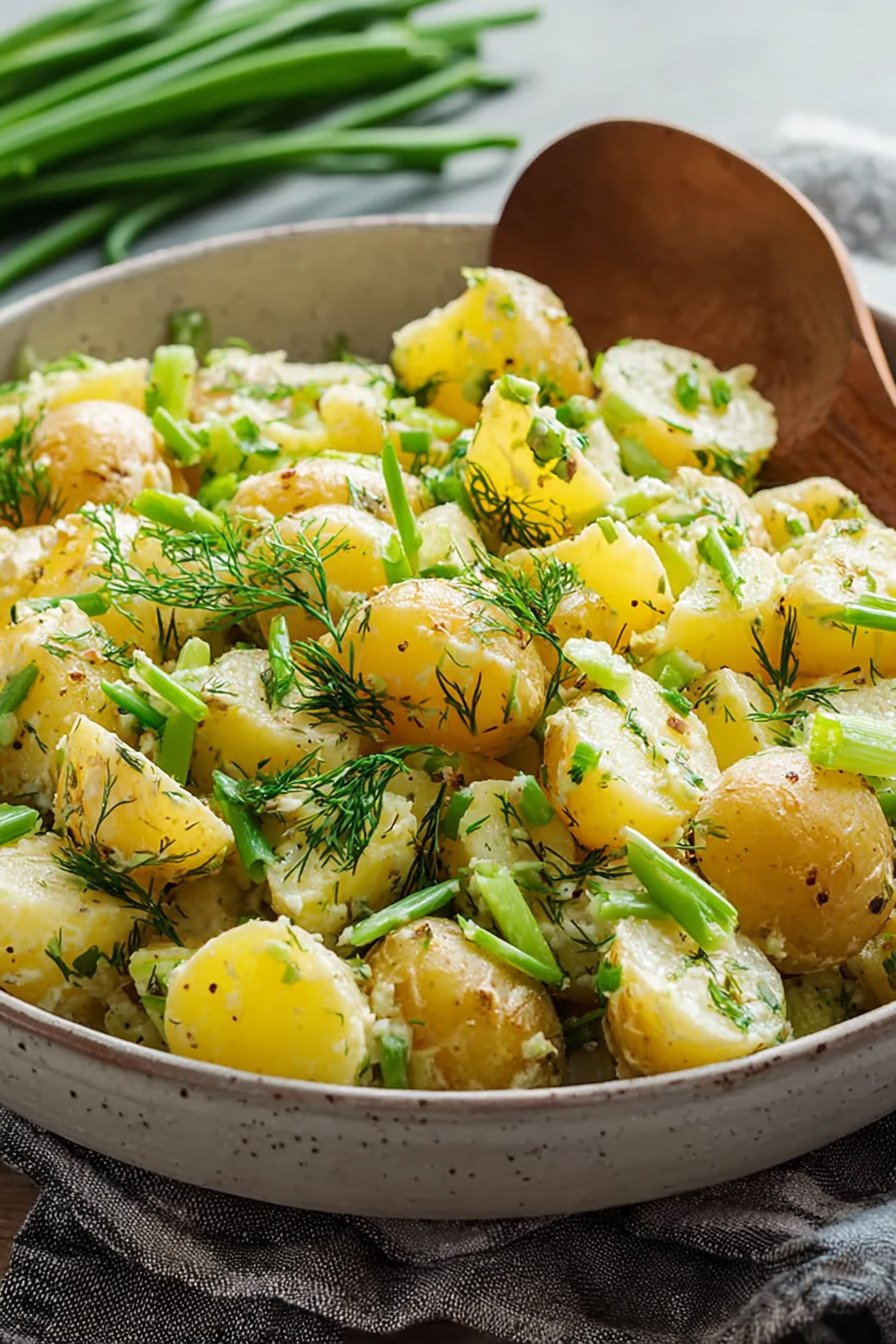
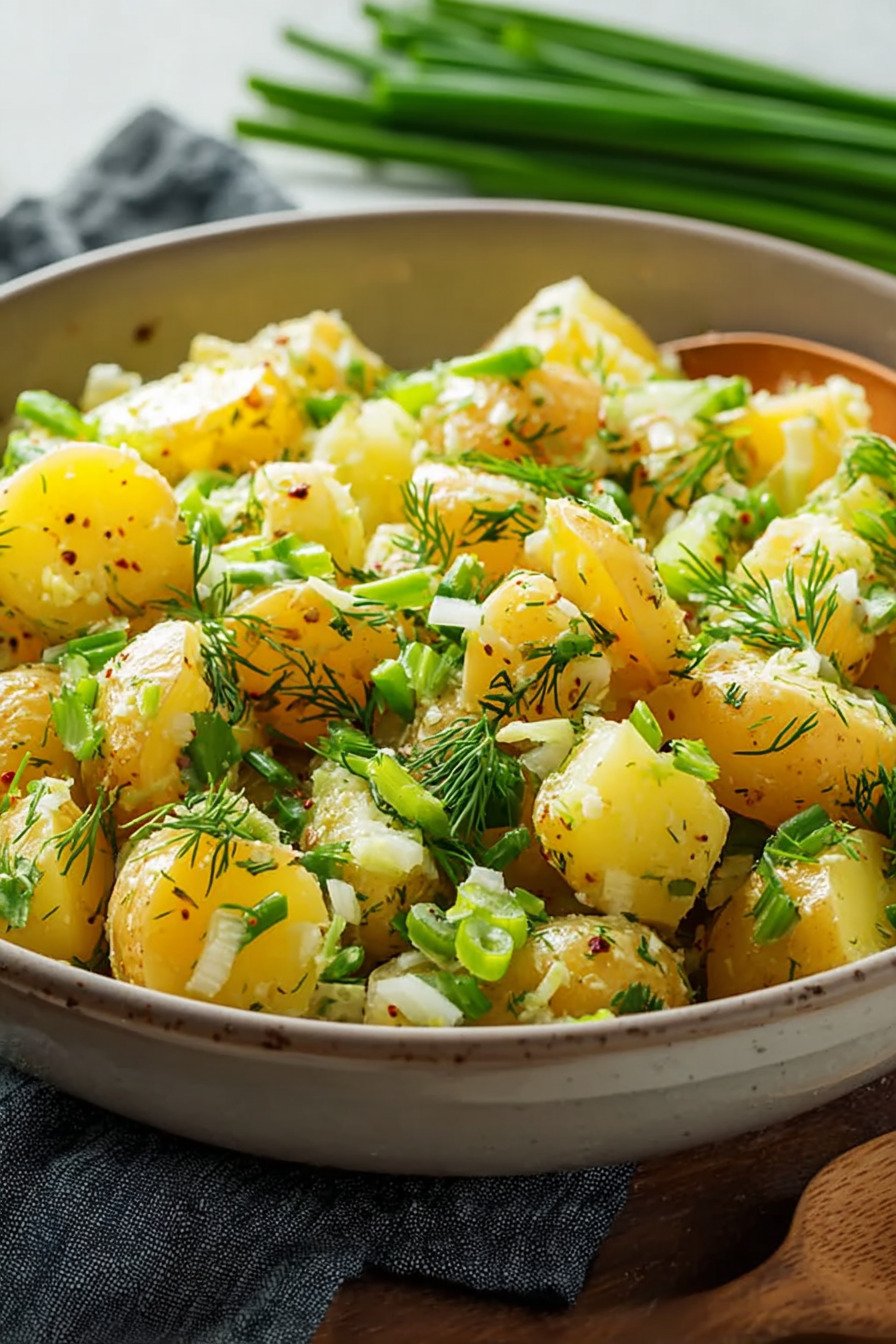
Healthy potato salad has the right texture when the potatoes look coated but not crushed. The pieces should still be recognizable, with soft edges but no mashed or smeared appearance. The dressing should cling lightly instead of pooling at the bottom of the bowl.
The best texture signal is contrast. The potatoes should feel tender and creamy inside, while the celery and green onions add fresh crunch. If the salad feels pasty, the potatoes were likely overcooked or mixed too firmly. If it feels watery, the potatoes may not have cooled or drained long enough.
The flavor should be cool, tangy, lightly savory, and herb-forward. You should notice dill and parsley before the garlic powder, and the Dijon should brighten the dressing without making it harsh. A balanced healthy potato salad tastes fresh after chilling, not flat or sour.
11) Professional Secrets Behind Better Healthy Potato Salad Recipe
The first professional-style secret is seasoning in stages. Salted cooking water seasons the potatoes from the beginning, but the final adjustment after chilling decides whether the salad tastes complete. This two-step seasoning prevents the outside from tasting salty while the inside stays bland.
The second secret is controlling water. Potato salad is not only about dressing; it is about how much moisture the potatoes carry into the bowl. Letting steam escape before mixing protects the yogurt dressing and keeps this easy healthy potato salad creamy instead of loose.
The third secret is gentle folding. A spatula works better than a spoon because it lifts and turns the potatoes without scraping them into paste. This small technique keeps the salad looking fresh and makes the texture feel more intentional.
12) Best Dishes or Pairings to Serve With Healthy Potato Salad Recipe
This healthy side dish salad pairs well with grilled chicken, turkey burgers, baked salmon, veggie wraps, picnic sandwiches, or simple roasted vegetables. The tangy yogurt dressing cuts through richer mains, while the potatoes make the plate feel more satisfying.
For summer meals, serve it with corn on the cob, sliced tomatoes, cucumber salad, grilled zucchini, or a crisp green salad. The cool temperature makes it especially useful next to hot grilled foods because it brings contrast without needing a heavy sauce.
For lunch prep, spoon it beside hard-boiled eggs, shredded chicken, chickpeas, or leafy greens. If using it in a lunchbox, keep extra herbs or cucumber separate until eating so the texture stays clean and crisp.

13) Making Healthy Potato Salad Recipe Ahead of Time
This recipe can be made ahead because the potatoes benefit from a short rest in the dressing. For the best texture, make it up to 24 hours before serving, cover it tightly, and keep it refrigerated. Stir gently before serving because the dressing may settle slightly as the potatoes absorb flavor.
If making it further ahead, keep the cucumber and final herb garnish separate. Cucumber releases moisture, and fresh herbs look brighter when added close to serving. Eggs can be boiled ahead, sliced, and added on top just before the salad goes to the table.
For a meal prep potato salad, portion it into airtight containers and avoid overfilling each one. Pressing the salad tightly can crush the potatoes and make the texture denser by the second day.
14) Storing Leftover Healthy Potato Salad Recipe
Store leftover healthy potato salad in an airtight container in the refrigerator for up to 3 days. Keep it chilled and do not leave it at room temperature for long periods, especially because the dressing contains Greek yogurt.
Freezing is not recommended. Potatoes can become grainy after thawing, and the yogurt dressing may separate. The salad is meant to be served chilled or cool, so reheating is not needed and would damage the fresh herb flavor.
If leftovers taste a little muted the next day, refresh them with a small spoonful of Greek yogurt, a tiny splash of apple cider vinegar, and a pinch of salt and pepper. Stir gently to avoid breaking the potatoes.
15) FAQ (Real Cooking Questions)
Can I make this healthy potato salad recipe without mayonnaise? Yes. The dressing uses Greek yogurt for creaminess, Dijon for sharpness, olive oil for smoothness, and apple cider vinegar for brightness, so mayonnaise is not needed.
Why did my potato salad turn watery? The potatoes were probably too warm or too wet when mixed with the dressing. Drain them well, spread them out, and let them cool before tossing. If using cucumber, add it close to serving.
Can I use russet potatoes instead of baby potatoes? You can, but russet potatoes are more starchy and break down more easily. If using them, cut them into larger chunks, watch the boiling time closely, and fold very gently.
Is this a good summer potato salad for meal prep? Yes, as long as you store it cold and keep watery toppings separate until serving. The yogurt dressing tastes fresh after chilling, and the potatoes absorb more flavor as they rest.
How do I make the dressing taste less tangy? Add a small drizzle of olive oil and a pinch more salt, then let the salad chill. The potatoes will mellow the dressing as they absorb it.
16) Save This Healthy Potato Salad Recipe
If this Healthy Potato Salad Recipe helped you solve watery, bland, or mushy potato salad, save it for summer meals, meal prep lunches, and simple side dishes. The key reminder is: cool the potatoes before dressing, fold gently, and season again after chilling.
17) Conclusion
A better healthy potato salad comes down to small choices that protect texture and flavor. Cook the potatoes until tender but firm, release extra steam before dressing, balance the yogurt with mustard and vinegar, and fold the herbs in gently. Once you understand those checkpoints, the recipe stops feeling like a lighter substitute and starts tasting like a fresh, practical side dish with its own purpose.
The biggest transformation is confidence. Instead of guessing whether the potatoes are too warm, the dressing is too thin, or the seasoning is finished, you now have clear signs to look for: firm pieces, creamy coating, fresh crunch, bright herbs, and no watery pooling. That is the difference between a simple potato salad recipe that fades into the table and one that gets remembered for the right reasons.
18) Nutrition
Serving Size 1 portion Calories 185 Sugar 3 g Sodium 260 mg Fat 7 g Saturated Fat 1 g Carbohydrates 26 g Fiber 3 g Protein 6 g Cholesterol 0 mg





Leave a Comment