
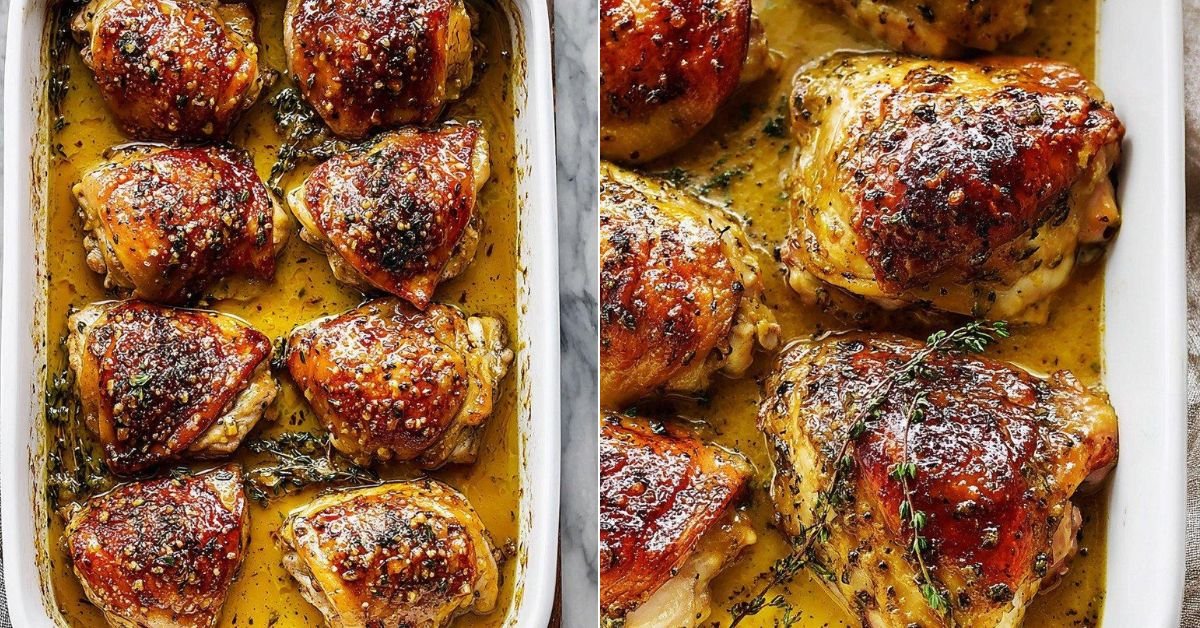
1) What I Learned Testing Honey Mustard Chicken
Dry chicken with a thin, sliding glaze is the problem that made me retest this dinner more than once. I’m Linda, and my first batch looked good going into the oven but came out pale because the chicken was too damp and the honey mustard mixture pooled in the pan. After adjusting the dry surface, glaze thickness, herb balance, and final broil, I discovered that baked honey mustard chicken thighs need both moisture control and heat timing. This honey mustard chicken thighs recipe now feels like the calm Sunday dinner I wanted: juicy, savory, gently sweet, and reliable.
Table of Contents
- 1) What I Learned Testing Honey Mustard Chicken
- 2) Key Takeaways
- 3) Easy Honey Mustard Chicken Recipe
- 4) Why Most Honey Mustard Chicken Recipes Fail
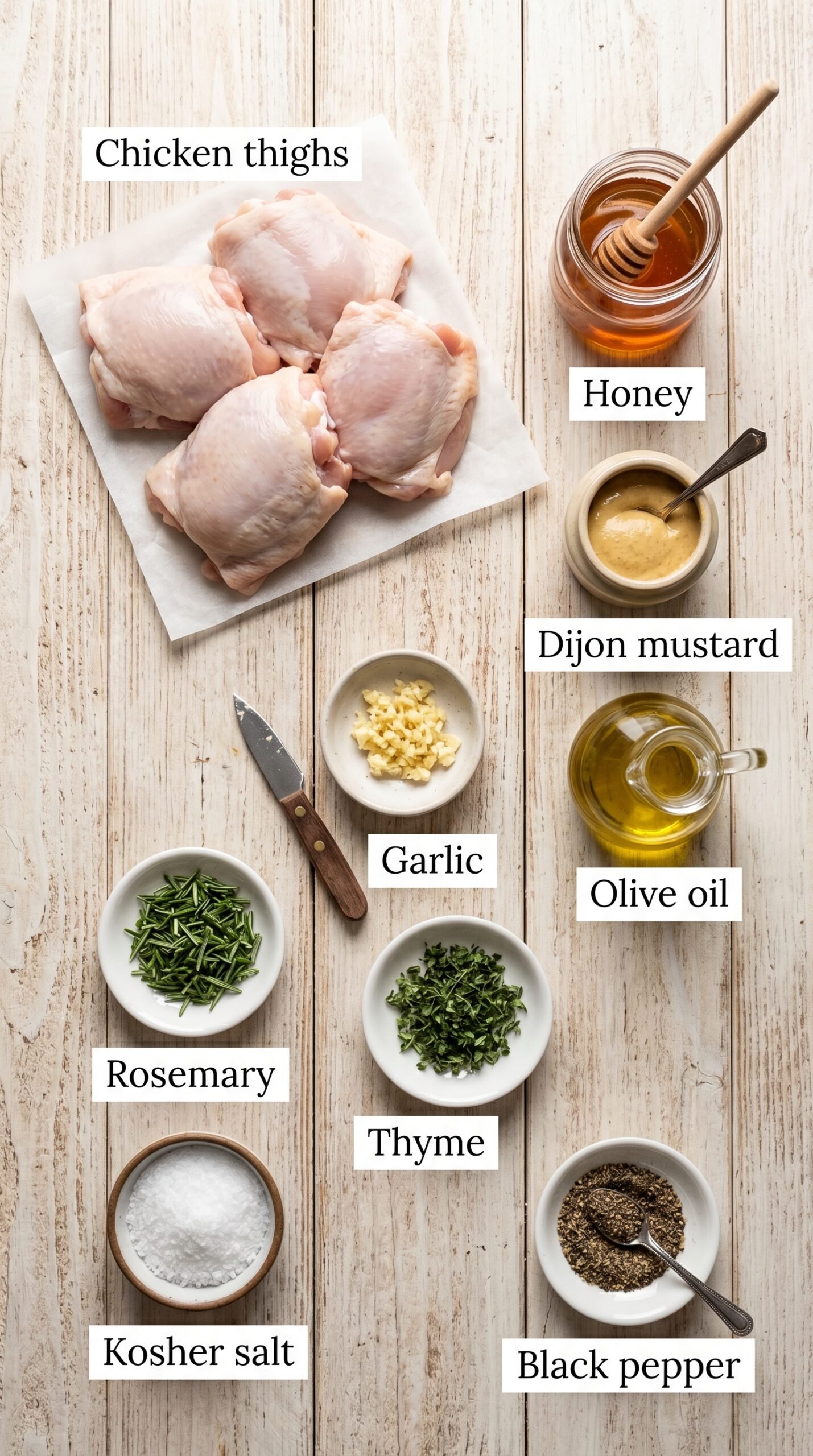
- 5) Ingredients for Honey Mustard Chicken
- 6) How to Make Honey Mustard Chicken
- 7) Recipe Card: Honey Mustard Chicken
- 8) Tips for Making Honey Mustard Chicken
- 9) Common Mistakes & Fixes
- 10) How to Tell Honey Mustard Chicken Is Done
- 11) Professional Secrets Behind Better Honey Mustard Chicken
- 12) Best Dishes or Pairings to Serve With Honey Mustard Chicken
- 13) Making Honey Mustard Chicken Ahead of Time
- 14) Storing Leftover Honey Mustard Chicken
- 15) FAQ (Real Cooking Questions)
- 16) Save This Honey Mustard Chicken Recipe
- 17) Conclusion
- 18) Nutrition
2) Key Takeaways
- Patting the chicken dry before adding the glaze helps baked honey mustard chicken thighs brown instead of steam.
- The honey, Dijon mustard, garlic, rosemary, and thyme create a sweet-savory coating that needs gentle oven heat before a short broil.
- Bone-in chicken thighs taste best when cooked to about 175°F because the dark meat becomes tender and juicy near the bone.
- The final 2 to 3 minute broil is a finishing step, not the main cooking step, because honey can burn quickly under direct heat.
3) Easy Honey Mustard Chicken Recipe
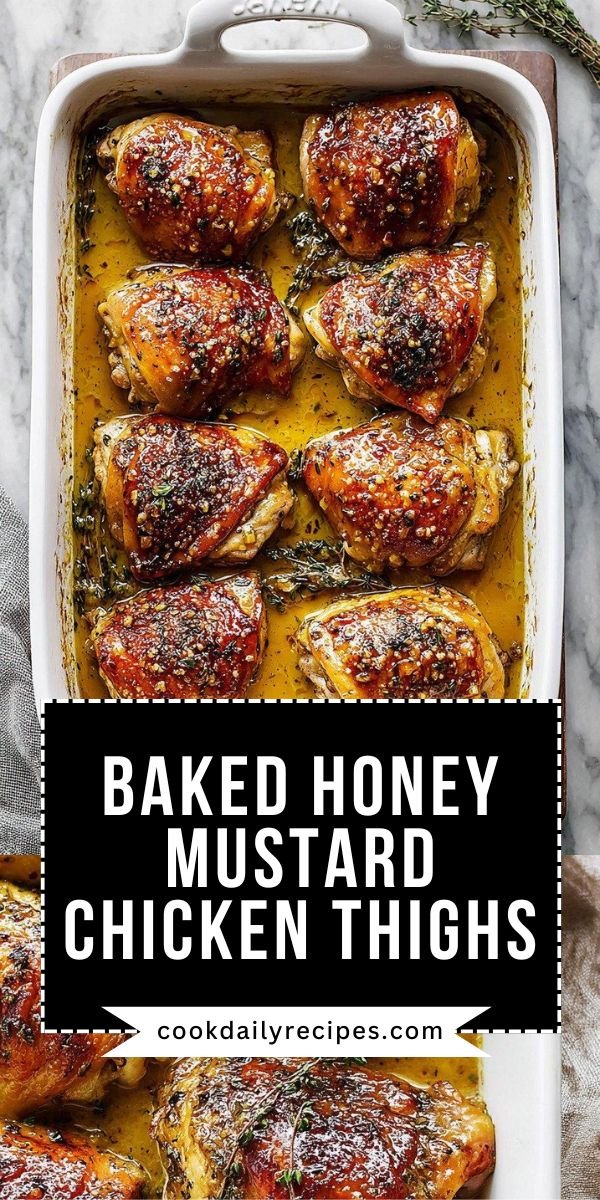
This Honey Mustard Chicken works because it treats the glaze like both seasoning and a finishing layer. The Dijon mustard brings sharpness, the honey brings gentle sweetness, and the fresh herbs keep the chicken from tasting flat. The method is simple, but the details matter: dry the chicken first, coat it generously, bake at moderate heat, then use the broiler only at the end for color and light crispness.
For easy mustard chicken thighs, the goal is not just cooked chicken. The goal is juicy dark meat, lightly crisp skin, and a glaze that clings instead of collecting at the bottom of the baking dish. That is why this mustard chicken thighs oven method uses a steady 350°F bake before the final blast of top heat.
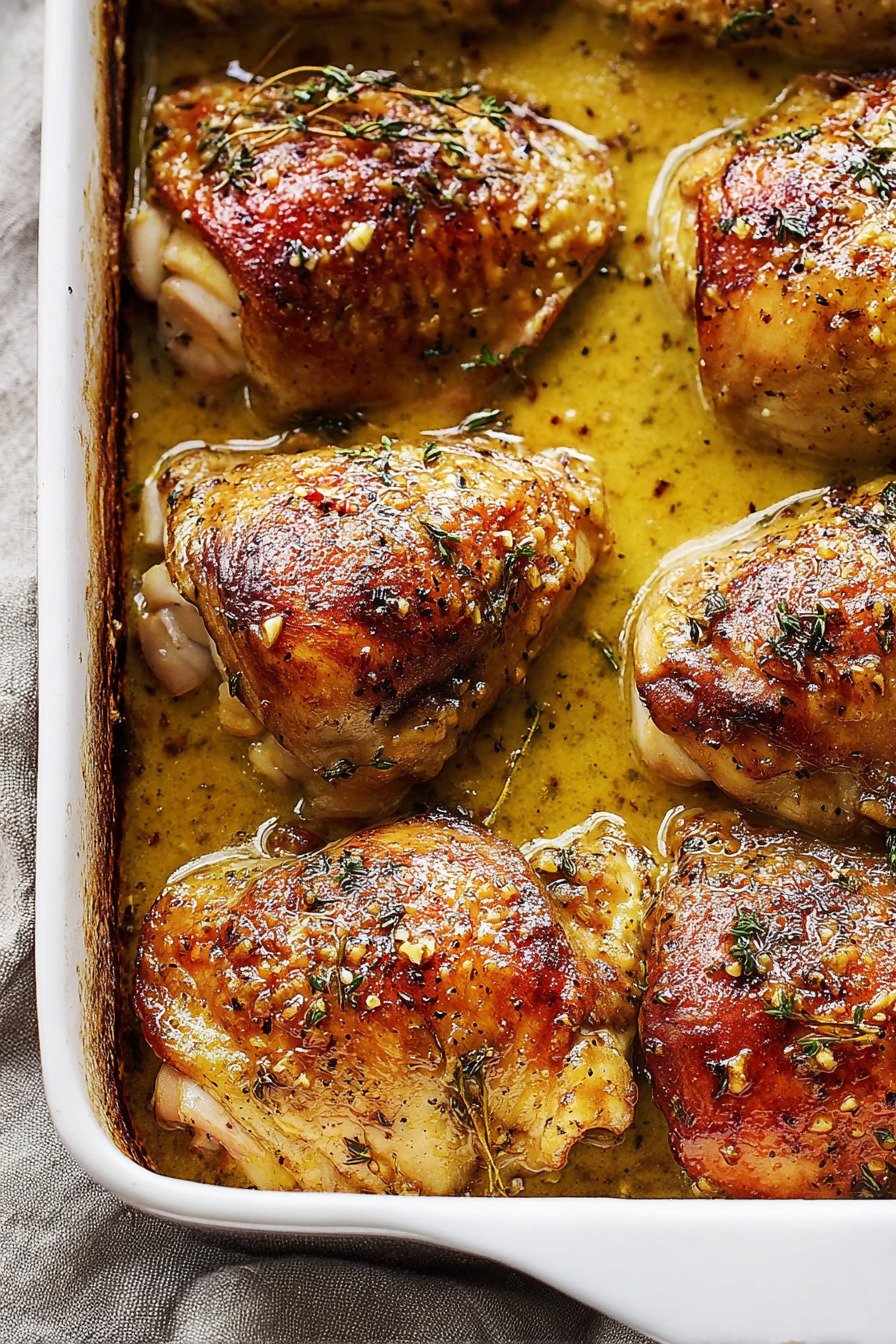
4) Why Most Honey Mustard Chicken Recipes Fail
Most Honey Mustard Chicken recipes fail for one of five practical reasons. The first is wet chicken skin. If the thighs are not patted dry, the surface moisture dilutes the glaze, prevents browning, and makes the sauce slide into the baking dish instead of staying on the meat. The second is a glaze that is not mixed evenly. Honey, mustard, garlic, oil, herbs, salt, and pepper need to be stirred until glossy so every bite tastes seasoned.
The third problem is burning the honey. Honey browns faster than the chicken cooks, so broiling too early can create dark spots before the meat is tender. The fourth problem is pulling the chicken from the oven too soon. Bone-in thighs benefit from reaching about 175°F, where the meat becomes tender and juicy. The fifth problem is under-seasoning. A sweet glaze without enough mustard, salt, herbs, and pepper can taste sticky instead of balanced.
5) Ingredients for Honey Mustard Chicken
Bone-in chicken thighs: Bone-in thighs stay juicy during baking because the bone slows heat transfer and helps protect the meat from drying out. Use them skin-side up in the baking dish. If replaced with boneless thighs, the cooking time will be shorter and the skin-crisping step will not apply the same way.
Honey: Honey adds sweetness, gloss, and light caramelization. Add it to the glaze before baking so it can coat the chicken evenly. If reduced too much, the glaze will taste sharper; if increased too much, it can scorch under the broiler.
Dijon mustard: Dijon balances the honey with tang and savory depth. It is especially important for honey mustard chicken thighs because it keeps the glaze from tasting one-dimensional. Yellow mustard can taste sharper and less refined, while whole-grain mustard gives a more textured finish.
Garlic: Minced garlic adds warmth and depth to the honey mustard chicken marinade for chicken thighs. Use it finely minced so it spreads through the glaze. Large garlic pieces can darken too quickly during broiling.
Extra-virgin olive oil: Olive oil loosens the glaze and helps it brush across the chicken. It also helps the herbs and garlic distribute more evenly. Leaving it out can make the mixture too sticky and harder to spread.
Fresh rosemary: Rosemary brings a sturdy herbal flavor that stands up to Dijon and honey. Chop it finely so the texture stays pleasant. Too much rosemary can overpower the sweet-savory balance.
Fresh thyme: Thyme adds a softer earthy note that supports the mustard without dominating the chicken. Add it directly to the glaze. Dried thyme can be used in smaller amounts, but fresh thyme gives a cleaner aroma.
Kosher salt: Salt sharpens the glaze and seasons the chicken surface. Add it to the honey mustard mixture so it spreads evenly. Without enough salt, the chicken can taste sweet but flat.
Freshly ground black pepper: Black pepper adds mild heat and savory contrast. Use it in the glaze before baking. Extra pepper at the end can make the finished chicken taste more balanced if the honey is very sweet.
- Bone-in thighs vs boneless thighs: Bone-in thighs take longer but stay juicier and are better for a roasted finish.
- Dijon mustard vs yellow mustard: Dijon gives smoother sharpness, while yellow mustard can make the glaze taste more acidic.
- Short broil vs long broil: A short broil crisps and colors the skin; a long broil can burn the honey before the chicken improves.
- Dry chicken vs damp chicken: Dry chicken holds the glaze better, while damp chicken creates a watery layer in the pan.
6) How to Make Honey Mustard Chicken
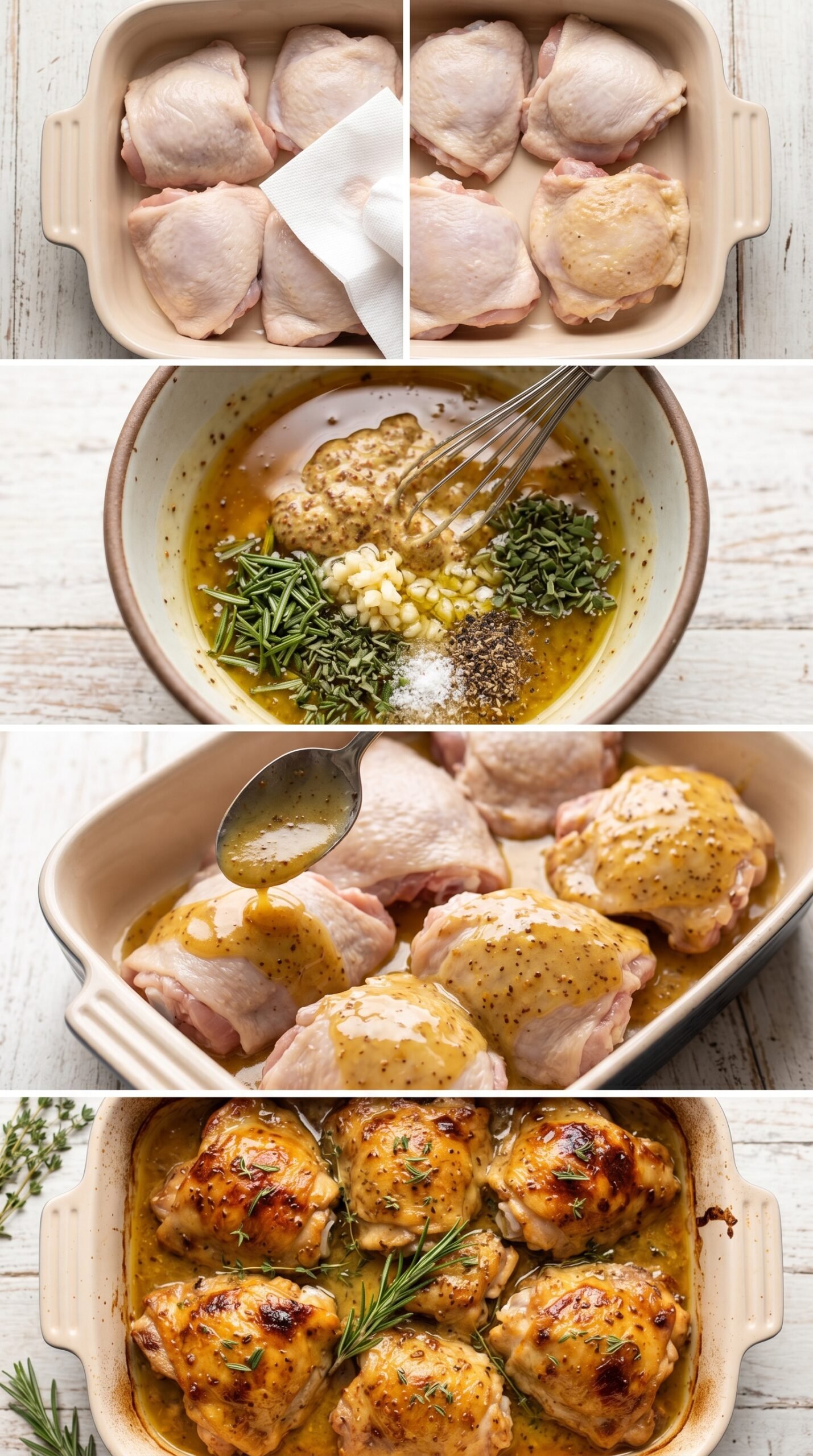
Step 1: Preheat the oven to 350°F and arrange the chicken thighs in a baking dish. Pat the chicken dry with a paper towel, especially over the skin and top surface, because this is the step that helps the glaze cling and improves browning.
Step 2: Stir the honey, Dijon mustard, minced garlic, olive oil, rosemary, thyme, kosher salt, and black pepper in a small bowl until the mixture looks glossy and evenly blended. If you see streaks of mustard or pockets of honey, keep stirring before coating the chicken.
Step 3: Brush or spoon the honey mustard mixture generously over the top of the chicken. Keep the thighs in a single layer so heat can circulate around them and the glaze does not become trapped between overlapping pieces.
Step 4: Bake for 40 to 45 minutes, checking the thickest part near the bone. The chicken is fully cooked when it registers 175°F and the juices look clear rather than pink.
Step 5: Turn on the top oven broiler for the last 2 to 3 minutes to lightly crisp the skin. Watch closely because the honey can move from golden to too dark quickly. Let the chicken rest briefly before serving so the juices settle.
7) Recipe Card: Honey Mustard Chicken
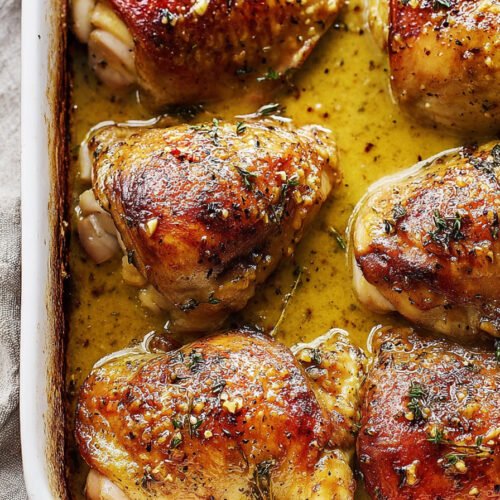
Honey Mustard Chicken with Juicy Baked Thighs
Ingredients
- 8 bone-in chicken thighs, kept skin-on for better browning and juicier meat
- ¼ cup honey, for a glossy sweetness that caramelizes lightly near the end of baking
- ¼ cup Dijon mustard, to balance the honey with sharp, savory depth
- 2 garlic cloves, minced finely so the flavor spreads through the glaze without burning in large pieces
- 1 tablespoon extra-virgin olive oil, to help the honey mustard mixture coat the chicken evenly
- 1 ½ teaspoons finely chopped fresh rosemary, for a piney herb note that stands up to the mustard
- 1 ½ teaspoons finely chopped fresh thyme, for a softer earthy flavor in the glaze
- ½ teaspoon kosher salt, to season the chicken and sharpen the honey mustard flavor
- ¼ teaspoon freshly ground black pepper, for mild heat and a savory finish
Instructions
- Preheat the oven to 350°F (177°C). Place the chicken thighs in a baking dish in a single layer, then pat the skin and surface dry with a paper towel so the glaze sticks instead of sliding off.
- In a small bowl, stir together the honey, Dijon mustard, minced garlic, extra-virgin olive oil, rosemary, thyme, kosher salt, and black pepper until the mixture looks smooth, glossy, and evenly combined.
- Brush or spoon the honey mustard mixture generously over the top of each chicken thigh, making sure the skin is well coated while keeping the pieces arranged in a single layer for even baking.
- Bake for 40 to 45 minutes, or until the chicken is fully cooked and registers 175°F (80°C) in the thickest part near the bone. During the last 2 to 3 minutes, turn on the top oven broiler to lightly crisp the skin, watching closely so the honey does not burn.
8) Tips for Making Honey Mustard Chicken
Use a baking dish that holds the chicken comfortably without stacking the pieces. Crowding traps steam, which softens the skin and thins the glaze. For one pan honey mustard chicken thighs, choose vegetables that can handle a 40 to 45 minute bake, such as small-cut carrots, onion wedges, or potatoes, and keep them around the chicken rather than piled on top of it.
Check temperature at the thickest part of the thigh, close to the bone but not touching it. Chicken thighs are safe earlier, but bone-in dark meat usually tastes more tender around 175°F because the connective tissue has more time to soften. Resting the chicken for 5 minutes also helps the juices stay in the meat instead of running out onto the plate.
If the glaze looks very dark before the chicken is done, loosely shield the top with foil and continue baking until the center reaches the right temperature. If the chicken is cooked but the skin still looks pale, use the broiler briefly at the end rather than raising the oven temperature for the whole bake.
9) Common Mistakes & Fixes
Problem: The glaze slides off the chicken. Cause: The chicken surface was too wet before coating. Fix: Pat the thighs dry thoroughly before adding the honey mustard mixture, and avoid pouring extra liquid into the baking dish.
Problem: The skin burns before the chicken is tender. Cause: The broiler was used too early or too long. Fix: Bake first, then broil only for the final 2 to 3 minutes while watching the pan closely.
Problem: The chicken tastes sweet but flat. Cause: The glaze needs enough Dijon, salt, herbs, and pepper to balance the honey. Fix: Mix the glaze evenly and make sure every thigh gets a generous coating.
Problem: The meat near the bone is not as tender as expected. Cause: The chicken may have been removed too soon. Fix: Cook bone-in thighs to about 175°F for a juicier, more tender dark-meat texture.
Problem: Garlic tastes harsh or bitter. Cause: Garlic pieces were too large or scorched under the broiler. Fix: Mince garlic finely and use the broiler only briefly at the end.
10) How to Tell Honey Mustard Chicken Is Done
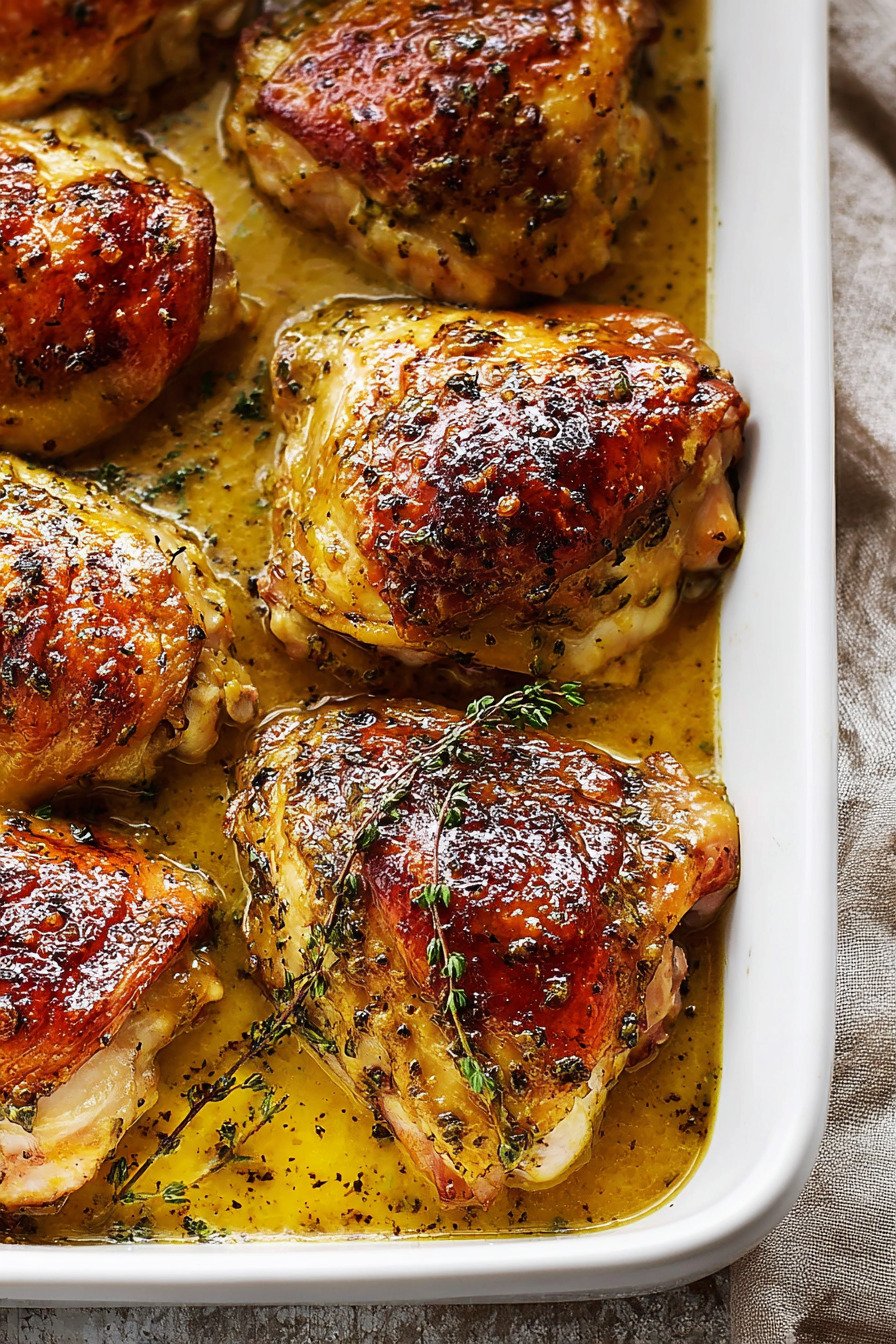
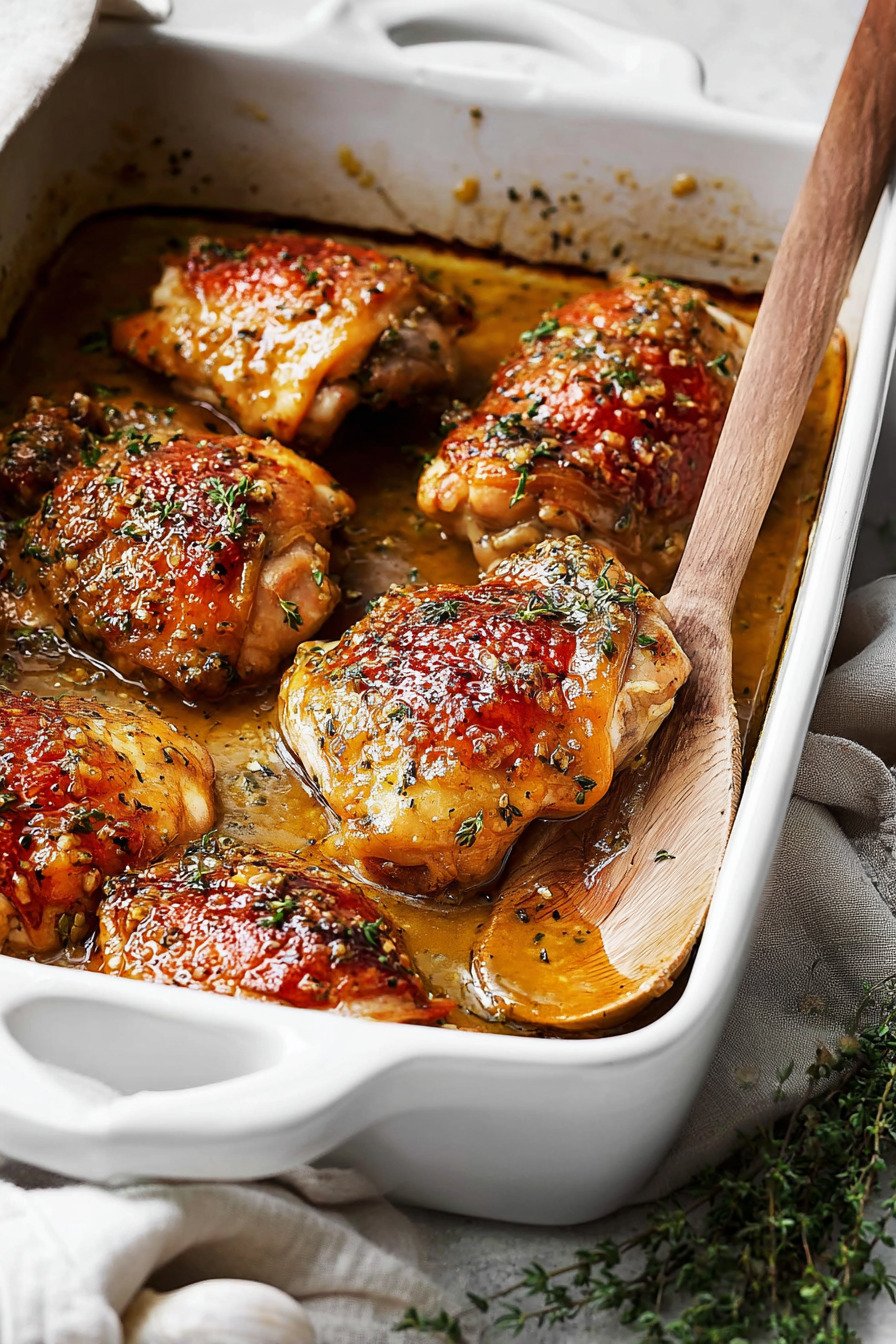
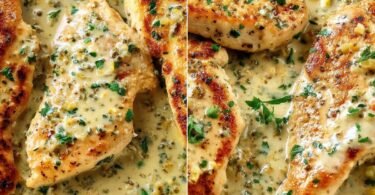
Honey Mustard Chicken is done when the thickest part of the thigh reaches 175°F, the meat near the bone looks opaque, and the juices run clear. Visually, the glaze should look glossy and slightly caramelized, not blackened. The skin should have light crisp edges after broiling, while the meat should feel tender when pierced with a fork.
The aroma should be savory, sweet, herbal, and lightly garlicky. If the smell turns sharp or burnt, the honey may be scorching under the broiler. Good baked honey mustard chicken thighs should taste balanced: tangy from Dijon, gently sweet from honey, aromatic from rosemary and thyme, and seasoned enough that the chicken itself does not taste bland beneath the glaze.
11) Professional Secrets Behind Better Honey Mustard Chicken
The first professional habit is surface control. Restaurants dry proteins before cooking because water delays browning. Even though this is an oven recipe, that same principle matters. Dry chicken holds seasoning better, browns better, and gives the glaze a stronger surface to cling to.
The second secret is staged heat. Moderate oven heat cooks the thighs through without burning the honey, while a short broil adds the finish people usually want from roasted chicken. The third secret is herb size. Finely chopped rosemary and thyme distribute flavor evenly, so one bite is not overly herbal while another tastes plain.
The final secret is resting. It is tempting to serve chicken straight from the oven, but a short rest makes the meat juicier and gives the glaze a moment to settle into a shiny coating instead of running immediately onto the plate.
12) Best Dishes or Pairings to Serve With Honey Mustard Chicken
Honey Mustard Chicken pairs well with sides that can balance its sweet, tangy glaze. Roasted potatoes work well because they absorb pan juices without competing with the mustard. Rice is useful when you want a simple base that catches the extra sauce. A crisp green salad adds freshness and cuts through the richness of the chicken thighs.
For a comfort-style dinner, serve it with mashed potatoes, roasted carrots, or green beans. For a lighter plate, pair it with steamed vegetables, cucumber salad, or cauliflower rice. If you want a family-style meal, place the chicken on a platter with the pan juices spooned over the top and serve the sides separately so the skin stays as crisp as possible.

13) Making Honey Mustard Chicken Ahead of Time
You can mix the honey mustard glaze ahead of time and refrigerate it in a covered container for up to 2 days. Stir it again before using because the oil and honey may settle slightly. For the best texture, coat the chicken right before baking instead of letting it sit too long in the glaze, especially if you want the skin to brown well.
If you want to prep the chicken earlier in the day, pat the thighs dry, arrange them in the baking dish, cover, and refrigerate. Keep the glaze separate until baking time. This keeps the surface from becoming wet and gives the finished chicken better color. When ready to cook, brush the glaze over the thighs and bake as directed.
14) Storing Leftover Honey Mustard Chicken
Store leftover Honey Mustard Chicken in an airtight container in the refrigerator for up to 3 to 4 days. Spoon a little pan juice over the chicken before storing to help protect the meat from drying out. The skin will soften in the refrigerator, but the flavor of the honey, mustard, garlic, and herbs will continue to taste rich and savory.
Reheat gently in a 325°F oven until warmed through. For better skin texture, uncover the chicken near the end and use a brief broil only if the glaze is not already too dark. Leftover chicken can also be sliced from the bone and served over rice bowls, salad greens, roasted vegetables, or tucked into wraps with a little extra mustard.
15) FAQ (Real Cooking Questions)
Can I use boneless chicken thighs? Yes, but the cooking time will be shorter. Start checking earlier, and remember that boneless thighs will not have the same skin texture or bone-in tenderness as the original method.
Can I make this with chicken breasts? You can, but chicken breasts are leaner and dry out more easily. Use a thermometer and remove them when they reach the proper internal temperature instead of following the thigh timing exactly.
Why did my honey mustard glaze burn? The broiler was likely too hot, too close, or used too long. Honey browns quickly, so broil only at the end for 2 to 3 minutes and watch the chicken closely.
Can I turn this into one pan honey mustard chicken thighs with vegetables? Yes, but use vegetables that can handle the bake time, cut them evenly, and keep them around the chicken rather than covering the skin.
Is this a good chicken thigh recipes honey mustard option for meal prep? Yes. Store the cooked chicken with a little pan juice, then reheat gently so the meat stays moist. The skin will soften, but the flavor remains useful for rice bowls, salads, and dinner plates.
16) Save This Honey Mustard Chicken Recipe
If this Honey Mustard Chicken helped you solve dry chicken or burnt glaze, save it for Sunday dinner, family meals, or a simple oven dinner night. The key reminder is: dry the chicken first, bake gently, then broil only at the end for glossy flavor and lightly crisp skin.
17) Conclusion
Honey Mustard Chicken becomes much more reliable when you understand the small steps behind the result. Dry chicken holds the glaze. A balanced honey and Dijon mixture gives the meat sweet, tangy, savory flavor. Moderate oven heat cooks the thighs through, and a short broil gives the skin color without burning the honey. Once those details are clear, baked honey mustard chicken thighs stop feeling unpredictable and start becoming a confident dinner you can repeat.
18) Nutrition
Serving Size 1 portion Calories 385 Sugar 9 g Sodium 270 mg Fat 24 g Saturated Fat 6 g Carbohydrates 10 g Fiber 0 g Protein 31 g Cholesterol 155 mg




Leave a Comment